Climate at a glance
The Seychelles enjoy an enviably warm climate all year round, with no extremes. In this tropical paradise the temperature rarely drops below 24 °C or rises above 32 °C. Apart from the most remote islands in the south, the Seychelles lie outside the cyclone belt, which makes them a destination you can visit at any time of year if you want sun and beaches.
There is no classic rainy season with days of non-stop rain. What matters are two wind systems, which shape the rain, the waves and the seaweed. The main islands are affected by both in much the same way, and the differences come mainly from which coast you are on.
Seasons and monsoon
North-west monsoon, roughly November to March
During the north-west monsoon winds the sea is usually calm and the weather warm and humid. Wind strength is 8 to 12 knots depending on the stretch of coast, and on average lower at the airport (see table). At times the wind drops away completely and it turns muggy.
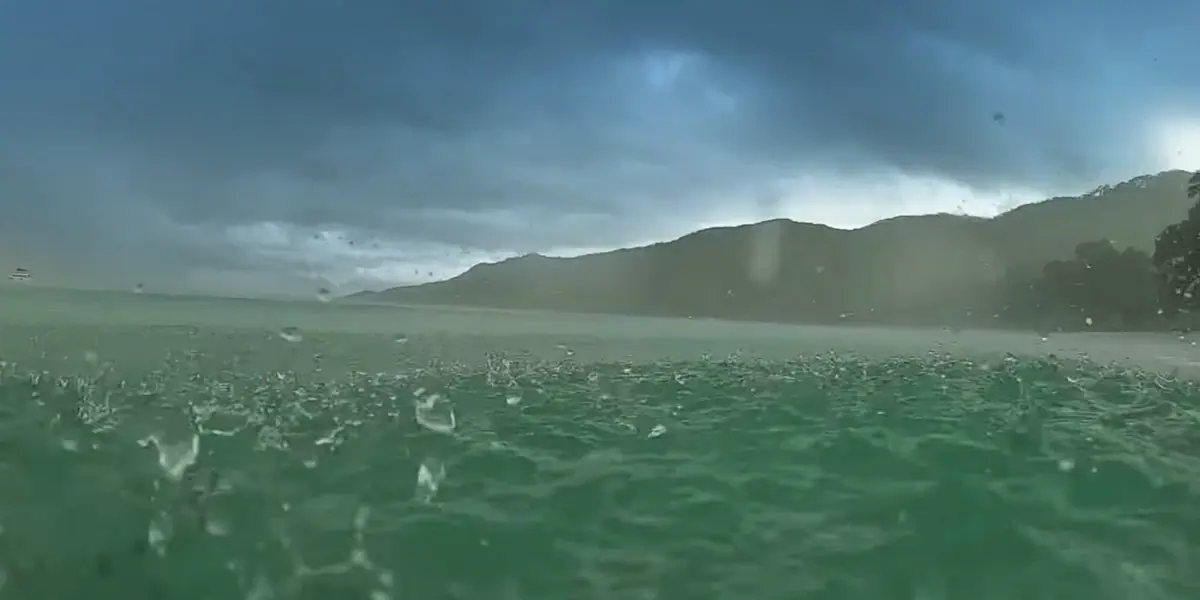
In January and February the islands get their life-giving rain, which swells the streams and rivers and brings plants and flowers into glorious colour. The rain mostly comes as a heavy shower or thunderstorm, often in the afternoon, and the sun soon returns in between.
South-east trade wind, May to September
The months from May to September bring drier, cooler weather and a rougher sea with wind strengths of 10 to 20 knots, especially on the south-east coast. July and August are the coolest months, and the wind peaks in August. Short showers still occur, but they rarely last long. The wind conditions suit sailors and windsurfers; you will find more under sailing in the Seychelles.
Transitional periods in April and October/November
In April the monsoon changes: the north-westerly eases off and the south-east trade wind sets in. October and November are similar in reverse. In these weeks there is often hardly any wind, the sea is smooth and visibility underwater is usually good. On the other hand the cooling breeze is missing, so it feels hotter. In the table April is the warmest month at 28.1 °C. Which time of year suits which type of traveller is covered under best time to visit the Seychelles.
Climate table: the weather through the year
The table summarises statistical averages from Mahé international airport since 1972.
| Month | Jan | Feb | Mar | Apr | May | Jun | Jul | Aug | Sep | Oct | Nov | Dec |
|---|---|---|---|---|---|---|---|---|---|---|---|---|
| Rainfall (mm) | 402.6 | 283.2 | 194.9 | 186.7 | 151.6 | 105.1 | 76.6 | 119.3 | 154.0 | 189.7 | 206.3 | 302.8 |
| Temperature (°C) | 26.9 | 27.4 | 27.8 | 28.1 | 27.8 | 26.7 | 26.0 | 26.0 | 26.5 | 26.9 | 26.9 | 26.9 |
| Avg. humidity (%) | 82 | 80 | 80 | 80 | 79 | 79 | 80 | 80 | 79 | 79 | 80 | 82 |
| Wind direction | NW | NW | NW | SW-NW | SE | SE | SE | SE | SE | SE | SW-NW | NW |
| Wind speed (knots) | 6.3 | 6.3 | 5.2 | 4.9 | 7.8 | 10.4 | 11.4 | 12.1 | 11.3 | 7.9 | 5.4 | 5.4 |
The figures apply to the coast of Mahé. It rains considerably more in the mountains, and the flat coral islands in the south are drier than the granite islands in the north. Daytime highs are above the monthly mean, as the table shows averages over day and night.
Wind, sea and seaweed by coast
The wind direction decides which beaches are calm and where seaweed is washed up. For the peak of the south-east trade wind, the weather service describes the south and south-east coasts as unpleasant and the sheltered west and north-west coasts as more pleasant. How much seaweed arrives varies from year to year.
| Time of year | Rougher and windier on | Usually calmer on |
|---|---|---|
| May to September (south-east trade wind) | South and south-east coasts, south coast of Praslin, south-west of Mahé (seaweed is common there) | West and north-west coasts |
| November to March (north-west monsoon) | Côte d'Or on Praslin (seagrass), north-west coast of Mahé such as Beau Vallon (some waves and currents) | South and south-east coasts |
Individual beaches are described on the pages Dream Beaches, Praslin, Mahé and La Digue. If you want to snorkel or dive, the calmer transitional months usually offer the best visibility, see Diving and Snorkelling.
Current: El Niño, heavy rain and cyclone season
The main islands get rain and wind, but tropical cyclones rarely reach them. The worst affected areas are the southern outer islands such as the Farquhar group.
Tips and frequently asked questions
- Rain: A light rain jacket is enough. Showers usually pass quickly. For packing tips, see Travel Luggage and the Travel Checklist.
- Hiking: After heavy rain, paths are slippery and streams swollen. Plan the walks from Hiking in the Seychelles for dry mornings.
- Bad weather: On rainy days, consider the museums and markets in Victoria, a visit to a spa, or the suggestions under Leisure and Culture and Sights.
- Forecast: Weather apps are inaccurate for individual small islands. The reports of the Seychelles Meteorological Authority are reliable.
Back to the Seychelles Islands or to the History of the Seychelles.
Do the Seychelles have a rainy season?
Yes, but it is not wet all the way through. Rainfall is highest from December to March, and heaviest in January. The driest months are June to August.
Which month is the warmest?
According to the table, April is the warmest, with an average of 28.1 °C. July and August are the coolest at 26.0 °C.
How warm is the sea?
The water stays above 25 °C all year round. Swimming and snorkelling are possible in every month; only the waves and the seagrass depend on the coast and the season.
When is the sea at its calmest?
In the transitional months of April and October/November, when the wind eases. During the north-west monsoon the south and south-east coasts are calmer, and during the south-east trade wind the west and north-west coasts are.
Do I need to worry about cyclones?
Rarely on the main islands. Apart from the most remote islands in the south, the Seychelles lie outside the cyclone belt. Even so, keep an eye on the official warnings during the cyclone season.