What you may not yet know about the flora and fauna of the Seychelles
The Seychelles are truly a living natural history museum, home to some of the rarest species of flora & fauna on Earth. Almost 50% of the land area is protected. The islands take pride in their far-sighted conservation policy, which has given the environment and the various ecosystems an enviably high level of protection.
Nowhere else in the world will you find such unique examples of endemic flora & fauna. The legendary coco de mer has the largest seed in the world and stands out for its unusual double-nut shape. Then there is the jellyfish tree, of which only around 90 mature trees are known, the Seychelles paradise flycatcher, a small bird species, and the Seychelles warbler.
The Seychelles are home to two UNESCO World Natural Heritage Sites: Aldabra, one of the largest raised coral atolls in the world, and the Vallée de Mai on Praslin, which was once believed to be the Garden of Eden. A British general really did think so in 1881. The forest has been under national protection since 1966, and it was added to the World Heritage List in 1983.
From the smallest frog to the heaviest tortoise and the only flightless bird in the Indian Ocean, the Seychelles offer a habitat for a range of remarkable endemic species in the midst of impressive scenery.
Plants: coco de mer, jellyfish tree and cloud forest
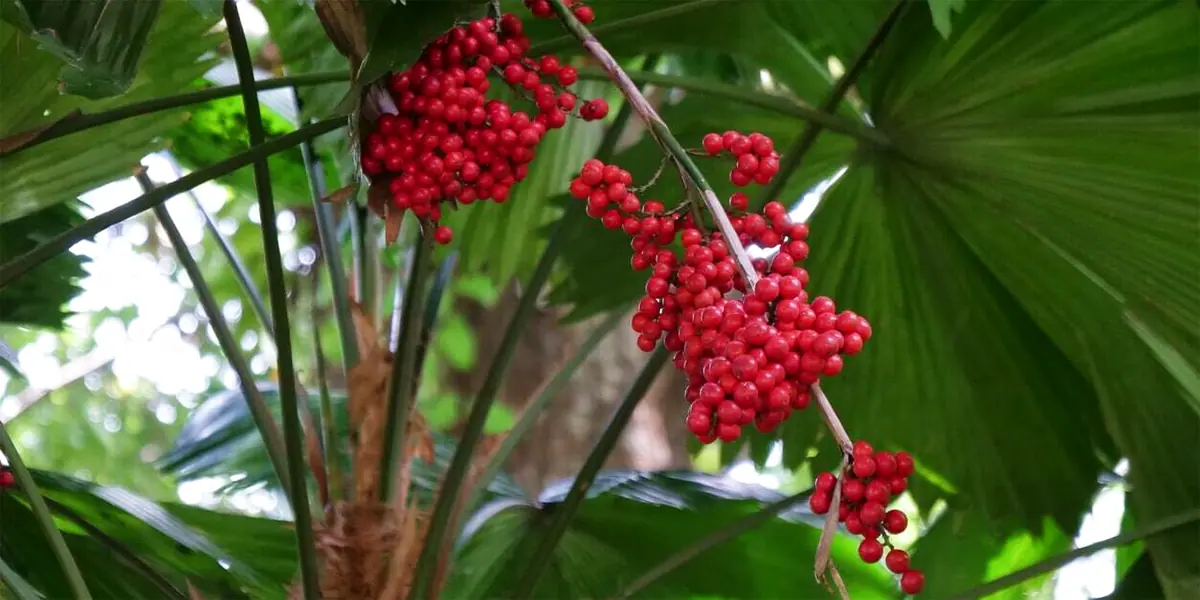
The coco de mer grows naturally only on Praslin and on the neighbouring island of Curieuse. The largest continuous stand is protected by the Vallée de Mai, a forest of just under 20 hectares in the middle of Praslin. The palms are either male or female, and only the female ones bear the famous nuts. In the half-light beneath the huge fan-shaped leaves it is noticeably cooler than on the coast, and the fronds creak and rustle in the wind.
The jellyfish tree occurs only on Mahé, in four small stands, including one on Mont Copolia. It was long thought to be extinct until a few trees were rediscovered in the 1970s. When the fruit splits open it resembles a jellyfish, hence the name. If you would like to see it, the best way is to combine it with a hike in Morne Seychellois National Park. You will find more under Hiking in the Seychelles.
The cloud forests in the mountains of Mahé and Silhouette also shelter species found nowhere else, among them the Seychelles pitcher plant. For general background on the protection of the islands, see Nature and Conservation.
Animals: giant tortoises, birds and marine life
Giant tortoises
Aldabra is home to the largest free-roaming population of giant tortoises in the world. A study by the SIF and the University of Exeter, published in autumn 2026, puts it at around 180,000 animals. The earlier estimate was about 100,000. In the 19th century hunting had reduced the population to fewer than 1,000 animals.
You do not have to travel to Aldabra to see giant tortoises. On Curieuse they roam freely, and there are also animals on Frégate and other islands. Keep your distance, do not feed the animals and do not sit on their shells.
Birds
The Seychelles paradise flycatcher lives on La Digue, where the Veuve Reserve protects its habitat. The Seychelles black parrot is found only on Praslin, and in the Vallée de Mai you can hear it with a little patience and sometimes see it. The Seychelles warbler is now back on several small islands, such as Cousin and Cousine. You will find seabird colonies on Aride and Bird Island, among others.
The only flightless bird of the Indian Ocean is the white-throated rail on Aldabra. It is the last surviving flightless rail species in the region.
In the water
The Ste. Anne Marine Park off Mahé has extensive seagrass meadows where green turtles often feed. It is a good place for snorkelling. On Aldabra, green and hawksbill turtles nest. For tips on equipment and places to go, see Diving and Snorkelling.
Where to experience nature and what it costs
| Location | What you can see | Entrance fee for non-residents aged 12 and over (as of November 2026) |
|---|---|---|
| Vallée de Mai (Praslin) | Coco de Mer, Black Parrot, palm forest | SCR 450 |
| Curieuse Marine Park | Giant tortoises, mangroves, Coco de Mer | SCR 300 |
| Curieuse Nesting Sea Turtle Trail | Sea turtle nesting sites | SCR 150 |
| Ste. Anne Marine Park (off Mahé) | Seagrass, sea turtles, snorkelling spots | SCR 200 |
| Morne Seychellois National Park (Mahé) | Cloud forest, Quallenbaum (jellyfish tree), hiking trails | Fees per trail: ask SPGA |
| Aldabra | Giant tortoises, White-throated Rail, seabirds | No day visits, only with SIF permit |
For the Vallée de Mai you should allow at least one to two hours. It lies on the road between Grand Anse and the east coast of Praslin and is easy to reach by bus or taxi. Opening hours change from time to time, so check with the SIF beforehand.
Rules and behaviour in nature
Coco de mer nuts as souvenirs are officially regulated. Buy only from licensed dealers who provide proof of authenticity, and check the export rules before you leave, see Customs Regulations. More rules of conduct can be found under Do’s and Don’ts.
Frequently asked questions
Where is the best place to see the coco de mer?
In the Vallée de Mai on Praslin. There are also stands on Curieuse, where you can combine the visit with the free-roaming giant tortoises.
Can I travel to Aldabra as a tourist?
Only with permission from the SIF, and usually through an approved expedition operator. There are no day trips.
Where can I see giant tortoises?
Roaming freely on Curieuse, and also on some islands with a hotel, for example Frégate. The largest population lives on Aldabra.
When is the best time to travel for nature and wildlife?
You can visit the plant life all year round. Breeding and nesting seasons of birds and turtles differ by species and island, so ask the operator before you book. For weather and months, read Best Time to Travel.
Can I buy tickets for the parks online?
Yes, the SPGA has an online ticket system for its parks. Since 2023 the SIF has offered online tickets for the Vallée de Mai.
You can find more information about endemic species in the Seychelles from the relevant government environment authority and from the Seychelles Islands Foundation.
Back to Culture in the Seychelles or on to Investing and Offshore.