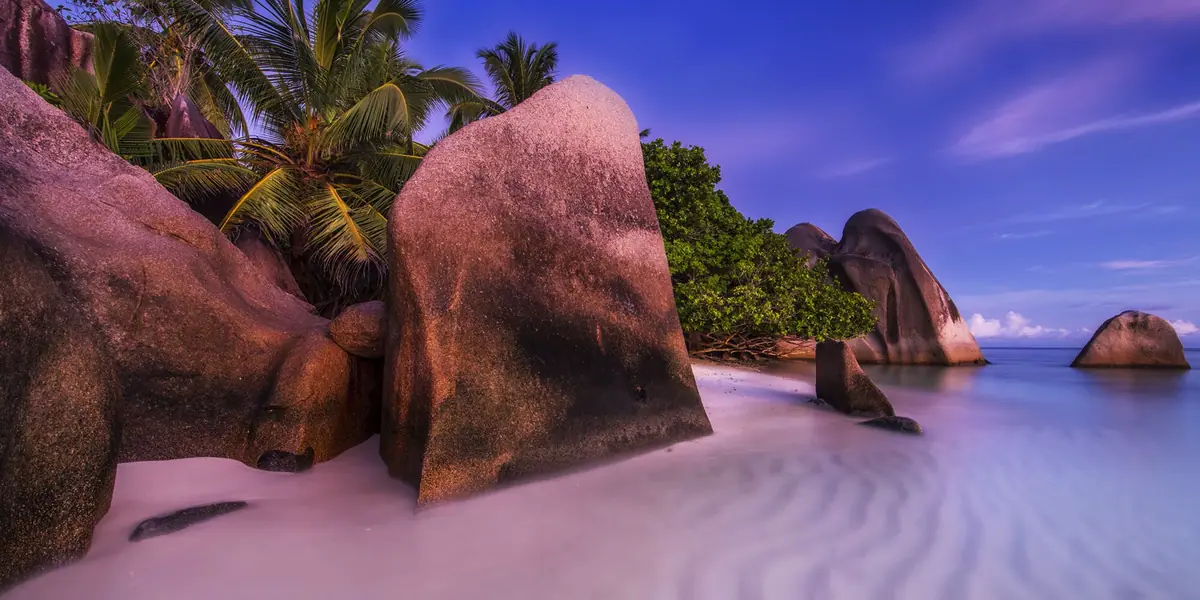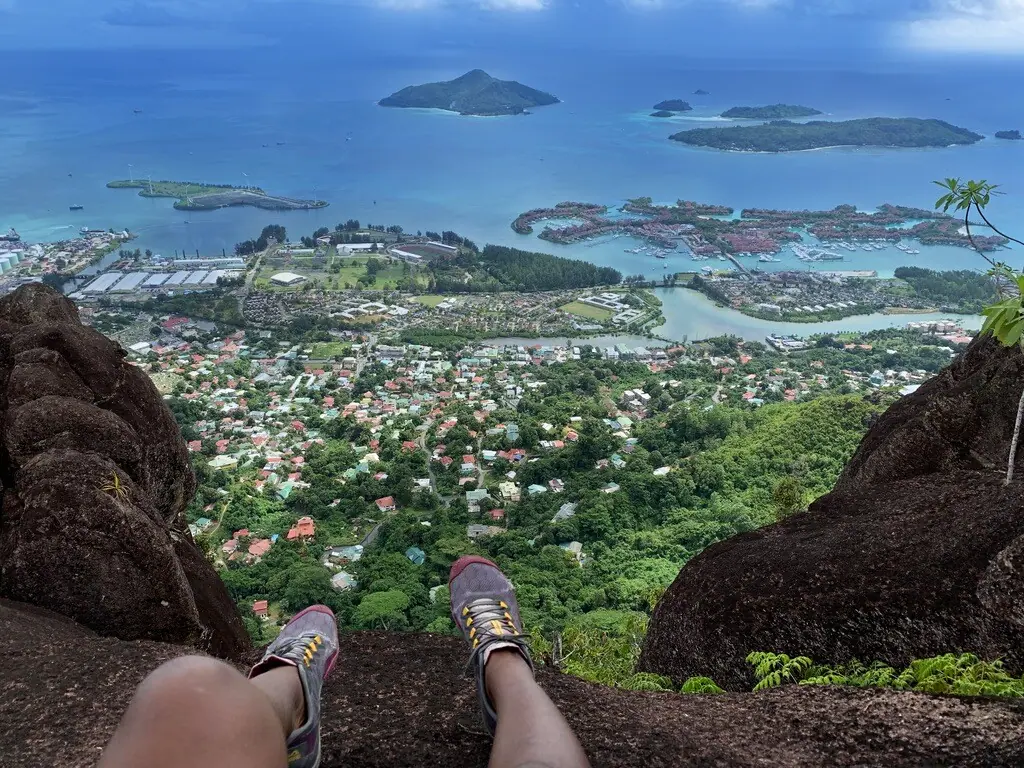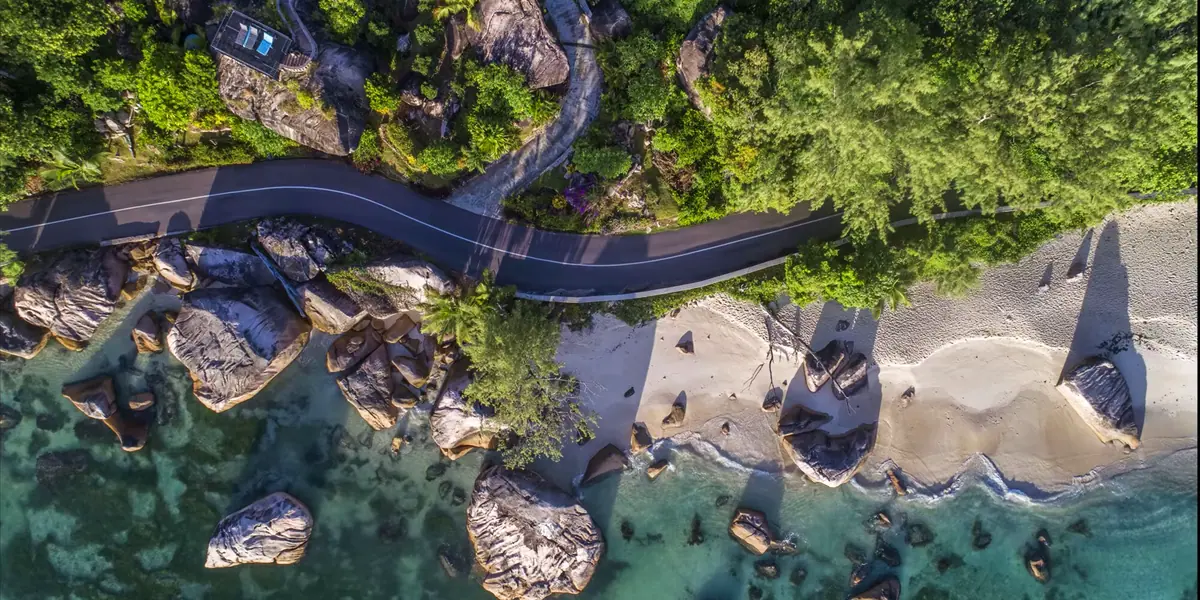
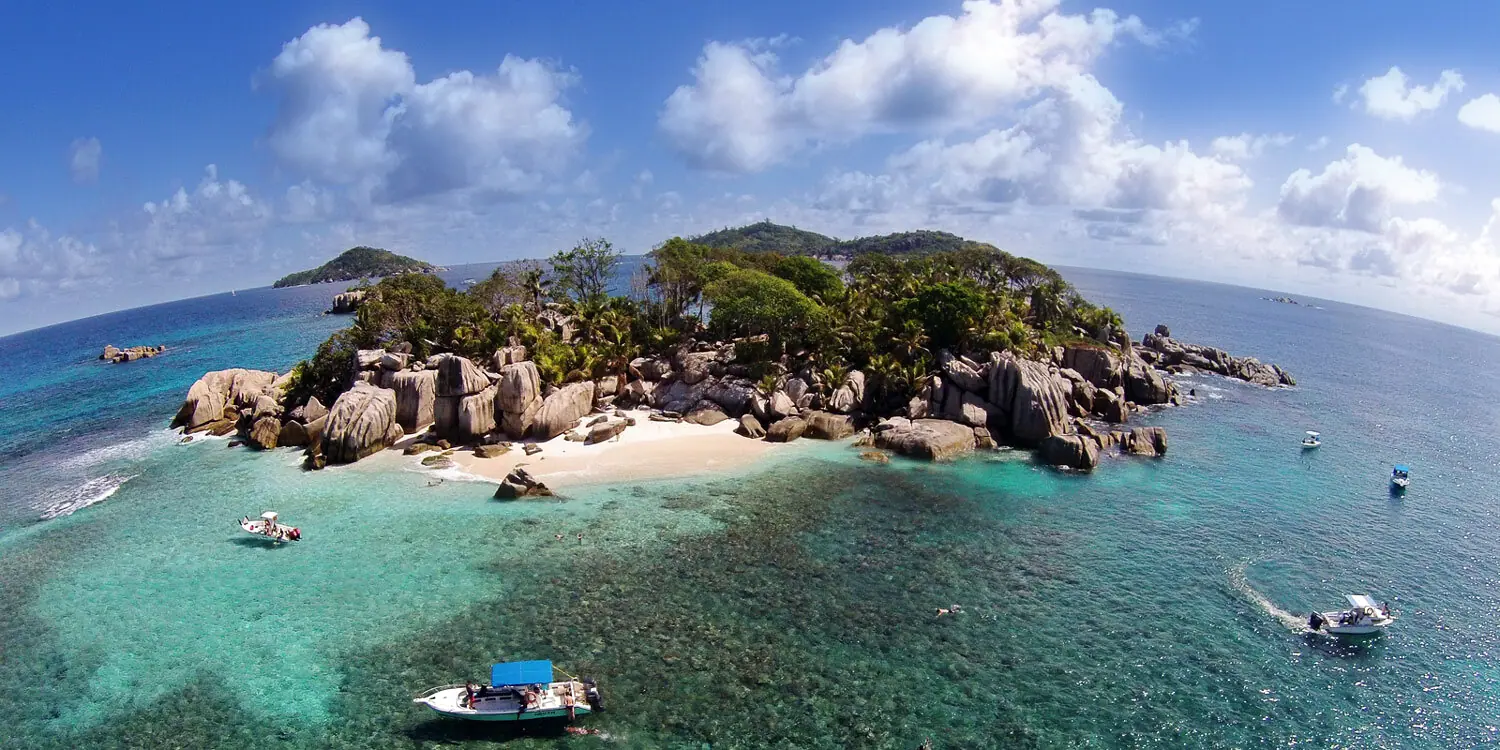
With 115 islands scattered between 4° and 10° south of the equator, the Seychelles offer varied and impressive dive sites in the Indian Ocean. The granite islands around Mahé continue underwater in great rock formations, and the water temperature stays between 26 and 30 °C for most of the year. Below you will find a list of the most interesting dive sites off the island of Mahé.
Useful information about dive sites in the Seychelles
Dive sites around Mahé
Trompeuse Rocks
lies north of Mahé, about 24 km away. At a dive depth of 65 ft there are large shoals of fish, as well as tuna and small sharks. Trompeuse Rocks is one of the Seychelles dive sites that you cannot miss, whether you arrive by land or by sea. The rocks rise out of the Indian Ocean and stand on the seabed at depths of up to 25 m. Please note that there is a strong underwater current here when you dive.Mamelles
lies north of Mahé, about 12 km away. At a dive depth of 40-60 ft there are shoals of fusiliers and corals. The site is right off the small uninhabited island. With a shallow reef on the south side and the modest depth, diving here is great fun.Ennerdale Wreck
lies north-east of Mahé, about 2.5 km away. At a dive depth of 100 ft you will find grouper and nurse sharks. Not far from Mamelles island, at a depth of up to 25 metres, lies the wreck of the English tanker Ennerdale, after which this dive site is named. As the wreck was blown up, it is possible to dive inside the ship.Ennerdale Rocks
lies north-east of Mahé, about 2.5 km away. At a dive depth of 40-80 ft there are tuna, kingfish, octopus and crayfish. This rock lies roughly 3 km south-east of the Ennerdale wreck. The area around the Ennerdale Rocks outcrops is also a great dive site. It is not too deep, rather shallow, and very well suited to beginners.Brissare Rocks
lies north of Mahé, about 4.5 km away. At a dive depth of 50-65 ft there are fire coral, wrasse and nurse sharks. The two small rocky islands are hard to miss. Around the rocks lies a large coral area full of reef fish.L'Ilot Island
lies north-west of Mahé, about 0.5 km away. At a dive depth of 50-65 ft there are snapper, parrotfish and soft corals. This is a small island that you can hardly miss when sailing around it. It is marked by a few palm trees and charming rock gardens, where you can expect larger shoals of reef fish. From November to March you may also see whale sharks.Chuckles
lies south of L'Ilot, about 0.5 km away. At a dive depth of 50 ft there are butterflyfish, sweetlips and angelfish. This reef consists of a single large granite boulder with many gullies and passages. Depending on the current, you will find a wide variety of fish here. The rocks are dotted with soft corals, and there are also beautiful fan corals. The steep walls shelter an abundance of reef fish and invertebrate life. In good conditions this dive site is used for night dives. Lobsters and Spanish dancers are present.Ste. Anne
lies in the marine national park east of Mahé, about 4 km away. At a dive depth of 30-50 ft there is a variety of fish and corals. It is a very pretty area for snorkelling and diving, with more than 150 species of fish and other sea creatures, and a huge, very well preserved array of brightly coloured corals. As it is a marine nature reserve, you will not be disturbed by fishermen.Harrison Rocks
lies east of Mahé, about 4 km away. The dive depth is shallow, and there are sharks and eagle rays. This is a wild, rugged granite reef, just 2.5 km south of Ile Sèche. When the sea on the west side at Beau Vallon is too rough, you should go diving on the other side of Mahé, around Victoria, where the water is fairly calm at that time. Visibility is then quite good and there is plenty to see, such as large stonefish, many shoals of soldierfish, shoals of big mackerel, giant moray eels and lionfish.Turtle Rocks
lies east of Mahé, about 3 km away. At a dive depth of 30-70 ft there are stingrays, sharks and soldierfish. It is a cluster of many granite boulders south of Ste. Anne National Park. The area is so large that a single dive can hardly cover it. You can see whitetip and nurse sharks, eagle rays, barracuda, mackerel, tuna, stingrays, batfish, scorpionfish and stonefish, and in season whale sharks too.Vista Rocks
lies north-west of Mahé, about 0.5 km away. At a dive depth of 40 ft there are crayfish, octopus and snapper. This is a very interesting dive area close to the shore. The mighty main rock rises 14 m above the seabed and even 2 m above the water surface. The rocks lie at the north end of Beau Vallon, opposite the Vista Bay Hotel.Sunset Rocks
lies north-west of Mahé, about 0.4 km away. At a dive depth of 40 ft there are scorpionfish and surgeonfish. Opposite the Sunset Beach Hotel, reefs run almost at right angles to the beach and break the surface of the water in many places.Northolme
lies north-west of Mahé, about 0.7 km away. At a dive depth of 30 ft there are snapper and eagle rays. This particularly shallow area, with a maximum water depth of 10 m, lies about 1 km out to sea from the Hilton Northolme Hotel. It is also especially suitable for beginners. It teems with reef fish and shoals of yellow snapper.Coral Gardens
lies north-west of Mahé, about 0.7 km away. At a dive depth of 40-60 ft there are yellow snapper, clownfish and angelfish. Several coral reefs surrounded by sandy bottom make up this area. Turtles and rays often visit these reefs. Clownfish can be found on many of the corals. The spot is also ideal for macro photographers. There are plenty of soft and hard corals. There is practically no current, and the spot is suitable for beginners.Vacoa
lies north-west of Mahé, about 3 km away. At a dive depth of 40-65 ft there are table corals and batfish. This colourful mixed coral reef lies about 3 km off Vacoa Village on Beau Vallon Bay. Depths vary a great deal: the landward side reaches 12 m, the seaward side 20 m. Numerous fish live here, including batfish. Table corals mainly cover the surface of the reef.
BV1
lies north-west of Mahé, about 4 km away. At a dive depth of 40-50 ft there are batfish and sergeant majors. The BV1 dive site is on Beau Vallon Bay, about 4 km from the police station on the beach. The special attraction is two large coral blocks, separated by a narrow corridor and more coral. In places the coral is broken, mainly by the fierce monsoon storms that sweep in again and again, but it still attracts plenty of fish: batfish glide around the divers, and kingfish arrive in large shoals.
Corsair Reef
lies north-west of Mahé, about 0.8 km away. At a dive depth of 40-85 ft there are eagle rays, soft corals and helmet shells. This coral reef runs parallel to the coast, less than 1 km off Le Corsair Restaurant at Bel Ombre (which, sadly, burned down in 2011). The best place to dive is between two large coral blocks.
Barge Wrecks
lies north-west of Mahé, about 0.8 km away. At a dive depth of 56-82 ft there are red snapper and grouper. The two shipwrecks were sunk at Corsair Reef by the Professional Divers Association Seychelles, the Seychelles People's Navy and the Victoria Port Authority, to make the dive site on the west side of the reef more interesting. The spots are marked with buoys. Many fish, including the bourzwa, have been attracted by this measure. One of the top dive sites!
Willy's Folly
lies north-west of Mahé, about 0.8 km away. At a dive depth of 88 ft there are larger fish species. A little way out to sea from Scala Reef, at a depth of about 27 m, lies another ship, sunk here in 1989, again to make the dive site more of an attraction. Many large fish have been sighted in the area ever since.
Horseshoe Rock
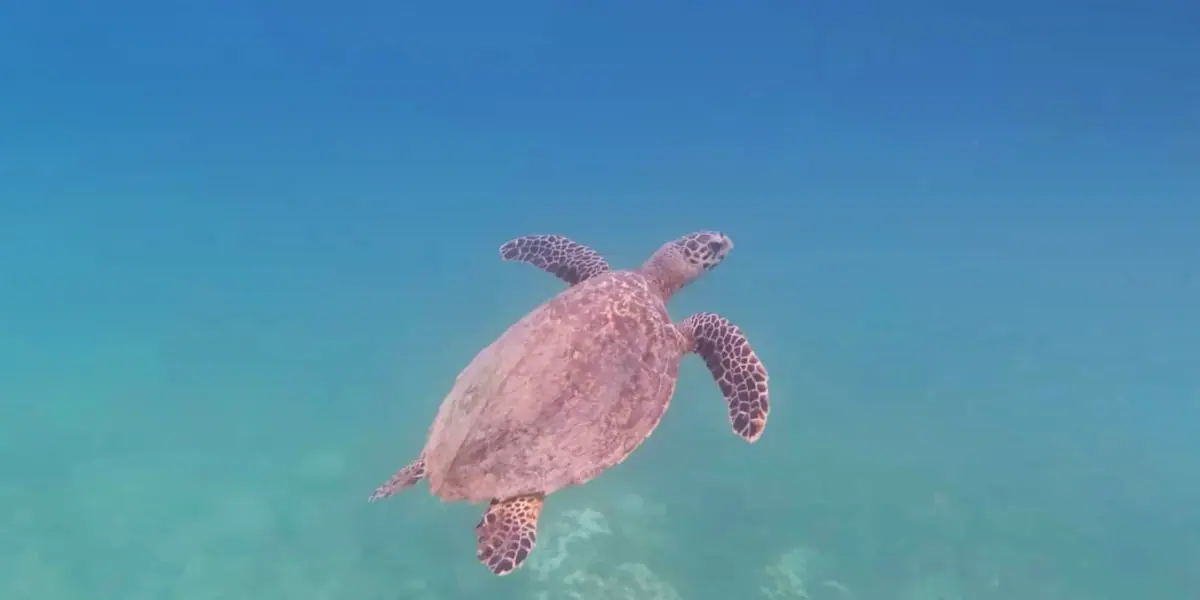
lies north-west of Mahé, about 0.7 km away. At a dive depth of 46 ft there are corals, eels and octopus. This half-round, submerged rock lies roughly 750 m east of Danzilles (the dead end road towards Bel Ombre). The landward side drops about 14 m to the sandy seabed. The seaward side has many gullies surrounded by coral gardens. Moray eels live at the western end, and the area is rich in fish and octopus generally. Now and then even hawksbill turtles appear.
Baie Ternay
lies west of Mahé, about 0.1 km away. At a dive depth of 30-85 ft there are sea turtles, eagle rays and corals. The park is suitable for swimmers and snorkellers. It is one of the best dive sites in the Seychelles. Bring plenty of time, as there are countless species of coral and a rich variety of fish life. The dive site consists mainly of coral, and the quality of these dive spots is excellent. Hawksbill turtles and eagle rays are seen regularly, as are a large number of living shells and snails. Nothing may be taken from this marine park, whether alive or dead!
Grouper Rock
lies west of Mahé, about 0.2 km away. At a dive depth of 72 ft there are grouper and red snapper. Grouper Rock lies at the far western headland of Baie Ternay. There is usually a strong current, at least around the big rocks. The mighty grouper lives here, along with many red and yellow snapper and soldierfish. Almost all the big fish gather in this rather wild area, and hawksbill turtles turn up too.
Conception Island
lies west of Mahé, about 1.5 km away. At a dive depth of 56-92 ft there are tuna, grouper and eagle rays. The dive site is outside Port Launay Marine National Park and a little south of Cap Ternay. It is a very noteworthy dive area close to the shore, with some considerable depths (over 28 m) and steady, at times even dangerous currents. Shoals of tuna pass through, as do large grouper, eagle rays, barracuda and other big fish. All of them are seen regularly. At certain times of year huge shoals of fusiliers also fill the area.
Ile Therese
lies west of Mahé, about 1 km away. At a dive depth of 32-66 ft there are corals, eels and octopus. About 2 km from Conception Island, this area offers diving in shallow water (up to 10 m) as well as in deep water (up to 20 m). Every diver can expect a rich variety of fish, even though some of the corals are damaged.
Trois Bancs
lies west of Mahé, about 4 km away. At a dive depth of 40-110 ft there are eagle rays, batfish and barracuda. This large granite area lies 3 to 4 km from Beau Vallon Bay, with the seabed at 33 m. The rocks rise to 12 m. Here too, very strong currents can prevail.
Shark Bank
lies west of Mahé, about 8 km away. At a dive depth of 62-150 ft there are red snapper and grouper. Shark Bank is known for its enormous grey stingrays and for its large, still undamaged white gorgonian sea fans. Shoals of small barracuda, batfish, bannerfish and Moorish idols are everywhere, and whale sharks and grouper are also spotted again and again.
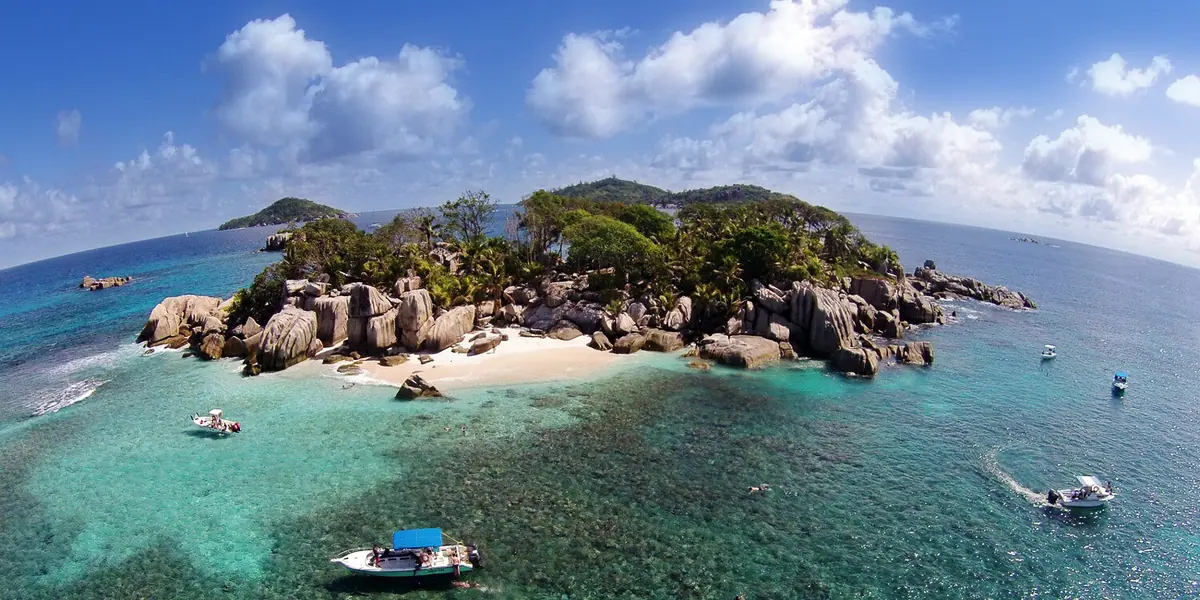
Dive sites around La Digue and Praslin
Ave Maria
One of the better-known dive sites in this area is a line of huge granite boulders surrounding the small island, dropping away in dramatic vertical walls and swim-throughs. The series of sheltered gullies and coves is home to a rich fish population, including stingrays, spotted eagle rays, Napoleon wrasse and reef sharks, and turtles visit as well.Channel Rocks
These rocks sit in the middle of the channel between Praslin and La Digue and are a magnet for fish and invertebrates among their corals. A number of interesting gullies and holes offer plenty of shelter, both for the shoals of smaller reef fish and for the larger groupers and snappers.White Bank
Right next to Ave Maria, less well known but just as inviting, lies White Bank. This line of rocks is the meeting point for shoals of unicornfish, jacks, snappers and batfish. In the crevices and tunnels you will find lobster, octopus, scorpionfish, bumphead parrotfish and whitetip sharks.Pate Anse Severe
Here a long granite spine supports an impressive coral reef, where bannerfish, parrotfish and surgeonfish swim past turtles and shoals of eagle rays. Look out for the beautiful anemones that shelter pairs of clownfish. The gentle current makes this an excellent spot for drift dives.Round Island
The gentle drift along the side of the island can bring several huge stingrays and nurse sharks into view. Bumphead parrotfish glide past, unbothered by the divers. Several species of large grouper can also be found, hiding under overhangs and in holes.Anse Marron Rocks
Here a long granite spine supports an impressive coral reef that has become a hunting ground for several small reef sharks. At the end of the reef there are a number of interesting caves and swim-through channels, home to a variety of shyer fish species.Roche en Bas
A circular granite formation decorated with corals, with swim-throughs and crevices to explore. An ideal place to find bumphead parrotfish, hawksbill turtles and shoals of eagle rays. Small stingrays and whitetip sharks sleep beneath the corals and rocks.Grand Sœur
Granite pinnacles rise 20 metres from the sand to the surface, forming impressive underwater towers and gullies. They offer Napoleon wrasse, sea bass, parrotfish and a great variety of colourful reef fish a sheltered home.Ouest Sœur Roche
A huge granite block is home to shoals of snappers and the extremely rare Armitage angelfish. Large barracudas and the obligatory, occasionally appearing Gris-Gris add to the excitement. One tip: the big marbled grouper (Mérou marbré) towards the end of the dive is very shy, so approach calmly!East Sister Bank
Drift dives over dramatic rock formations with swim-throughs and soft corals are a speciality. Shoals of bumphead parrotfish and hawksbill turtles are seen regularly, as is the unusual and colourful clown triggerfish.Albatros
These rocks between Sister Island and Félicité begin only three metres below the surface and form a natural focal point for swirling shoals of jacks and mackerel. Reef sharks and green turtles are often spotted.Lost City
A good place to dive among granite formations scattered over the seabed, rising to within seven metres of the surface. Grey reef sharks and nurse sharks are frequently encountered. The swim-throughs attract shoals of bumphead parrotfish, along with Napoleon wrasse, hawksbill turtles and lobster. Moray eels and stingrays lie on the sand.Shark Rock & Cayman Rocks
These two remote granite reefs have large coral formations, often visited by shoals of barracuda and jacks, and are home to turtles, stingrays, eagle rays and reef sharks.Pate Blanc Chiminee
This deep granite bank is an excellent spot to see shoals of large pelagic fish. Dogtooth tuna, big jacks, rainbow runners and red snappers roam the outer edge, while the overhangs shelter sleeping sharks, rays and an abundance of reef fish.Amoujie Mamon
This series of granite rocks covering the seabed is superb for a drift dive. They are a gathering place for many species of pelagic and game fish such as dogtooth tuna, big jacks and even sailfish. Look out for nurse sharks, giant stingrays and swarming oceanic triggerfish.Red Point
The underwater rocks at the eastern end of Curieuse are covered in an immense variety of corals, which attract an equally exciting variety of coral fish. Sharks and rays are often seen passing by. Turtles are also frequently spotted.Coral Garden
An extensive coral reef dominated by large coral heads and table corals, this is an excellent place to find lionfish, cuttlefish, moray eels and scorpionfish. Its protected status means you are often surrounded by shoals of hundreds of fusiliers and trevally. The rules of the marine park apply.Trompheuse Rock
A series of dramatic granite rocks just breaks the surface and is home to huge stingrays, reef sharks and pristine coral formations. Shoals of fusiliers pass over the divers, and turtles are often seen in the shallows.South Felicite
At this site a huge granite formation has literally split apart, leaving a series of narrow, interconnected gullies. They offer excellent diving and hiding places for many unique species of fish and coral, as well as visiting turtles.South Cousine
A long granite ridge rising to within seven metres of the surface is covered in hard and soft corals and is home to shoals of small fish, which in turn attract turtles, dolphins and the occasional reef shark. With a little luck, divers may also spot whale sharks at the right time of year.Trompheuse Rock
A series of dramatic granite rocks just breaks the surface and is home to huge stingrays, reef sharks and pristine coral formations. Shoals of fusiliers pass over the divers, and turtles are often seen in the shallows.Aride Island
The island is known as a nature reserve for its birdlife, and the underwater world is just as spectacular! The reefs off the island offer excellent diving and shelter for many unique species of fish and coral, as well as turtles.Whale Rock
This rock, which only just breaks the surface at low tide, is a potential hazard to shipping but a mecca for divers. Several reef sharks live at the site, and there is also an impressive 10 metre tunnel with several openings to the outer reef.Pate Charlotte
This dive site consists of a series of granite rocks surrounded by boulders covered in coral. You are guaranteed to find small reef sharks here (sometimes larger ones too!) and a great number of shoaling fish.Booby Rock
A drift dive around Booby Rock is an excellent way to see eagle rays, Napoleon wrasse, turtles and dolphins. Sleeping sharks and lobster hide under the rocks and coral heads, while shoals of snappers and soldierfish live on the reef tops. Whale sharks are quite possible in season.Chimney Rock
This offshore peak is covered in pristine coral formations and is only rarely visited by divers.Visibility is usually excellent, and shoals of devil rays are often seen, as well as giant groupers and reef sharks.
Roche Marianne
Grey reef sharks and stingrays rest on the sand at the foot of this rock. Shoals of batfish, snappers and the odd hawksbill turtle can be found a little shallower, near an impressive swim-through in the rocks. Large moray eels are often seen. Do not miss the different shades of blue created by the waves breaking on the rocks as you ascend.
South Marianne
The island drops steeply into the sea, forming dramatic, cathedral-sized structures. Three species of shark can be seen on a single dive, including up to 25 grey reef sharks patrolling the lower edges of the reef. Hawksbill turtles, Napoleon wrasse and eagle rays are easy to find, while guitarfish are a rare treat.
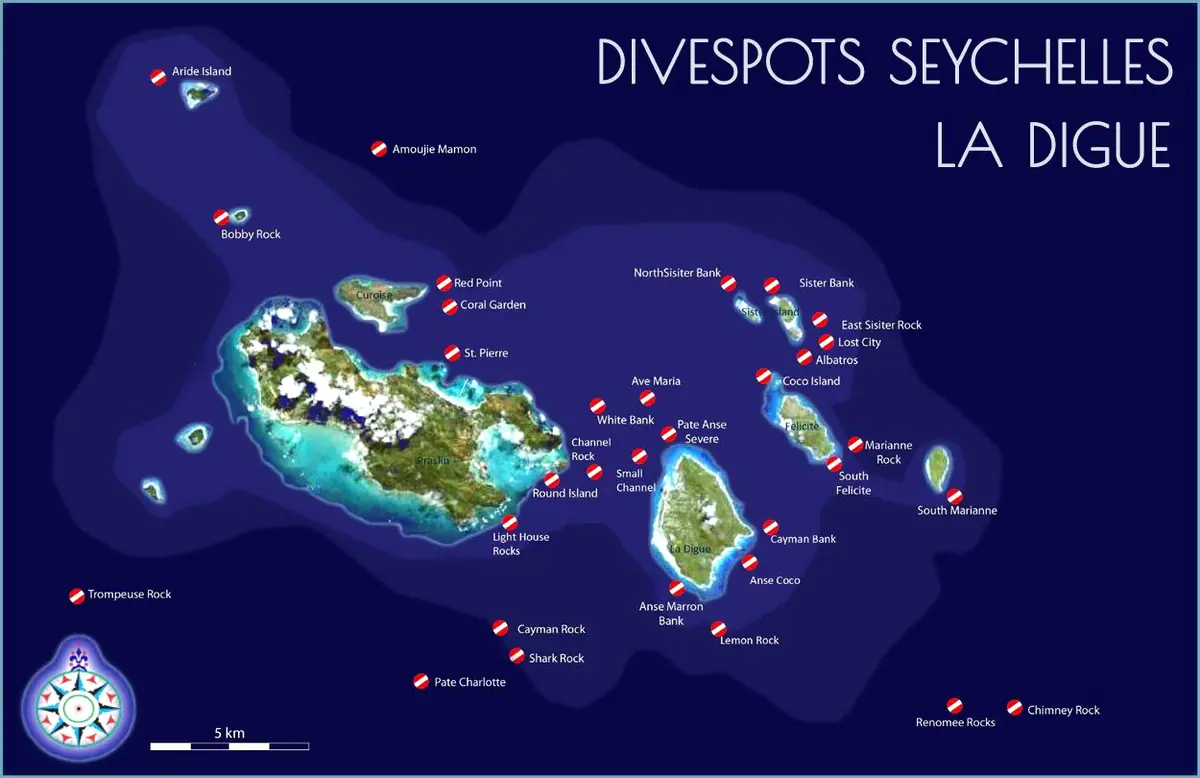
The Seychelles lie in the western Indian Ocean. Around the granite islands and the coral islands you will find very different diving areas, and the water temperature is usually between 26 and 30 degrees all year round. More dive sites are added from time to time. We are also interested in your own dive sites, so please do let us know about any others you would like to see listed.