Discovery and first visitors up to 1770
The search for fresh water led to the discovery of the Seychelles
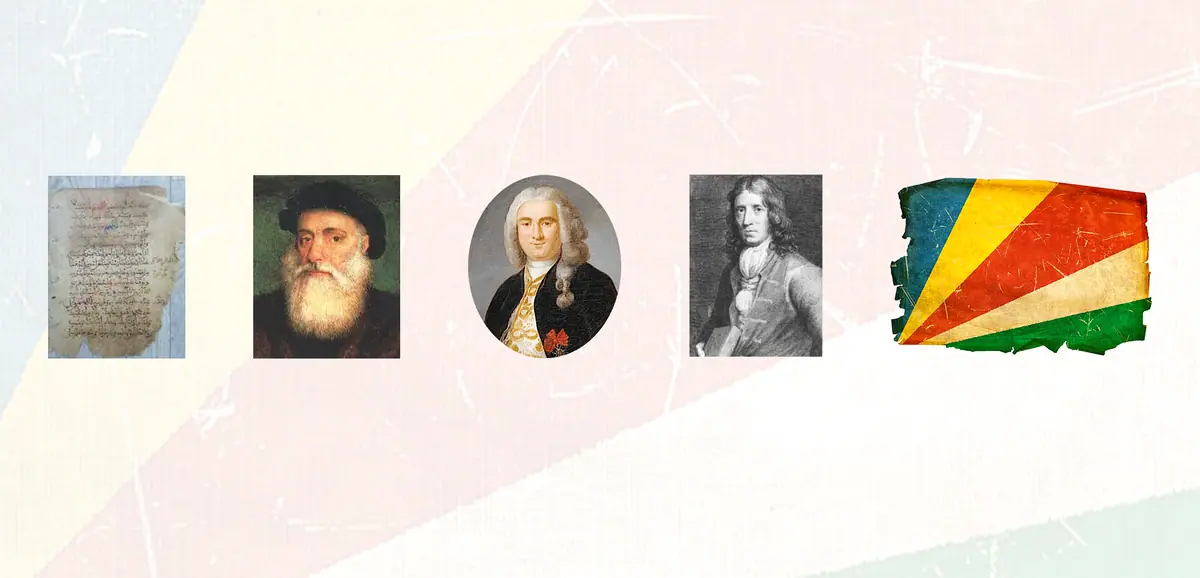
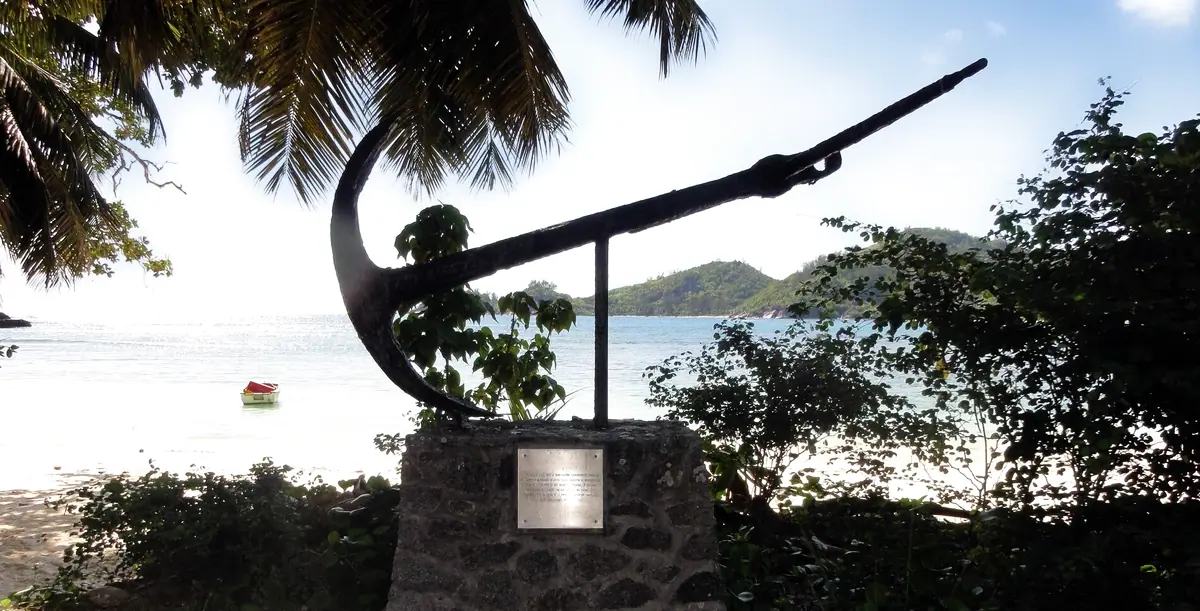
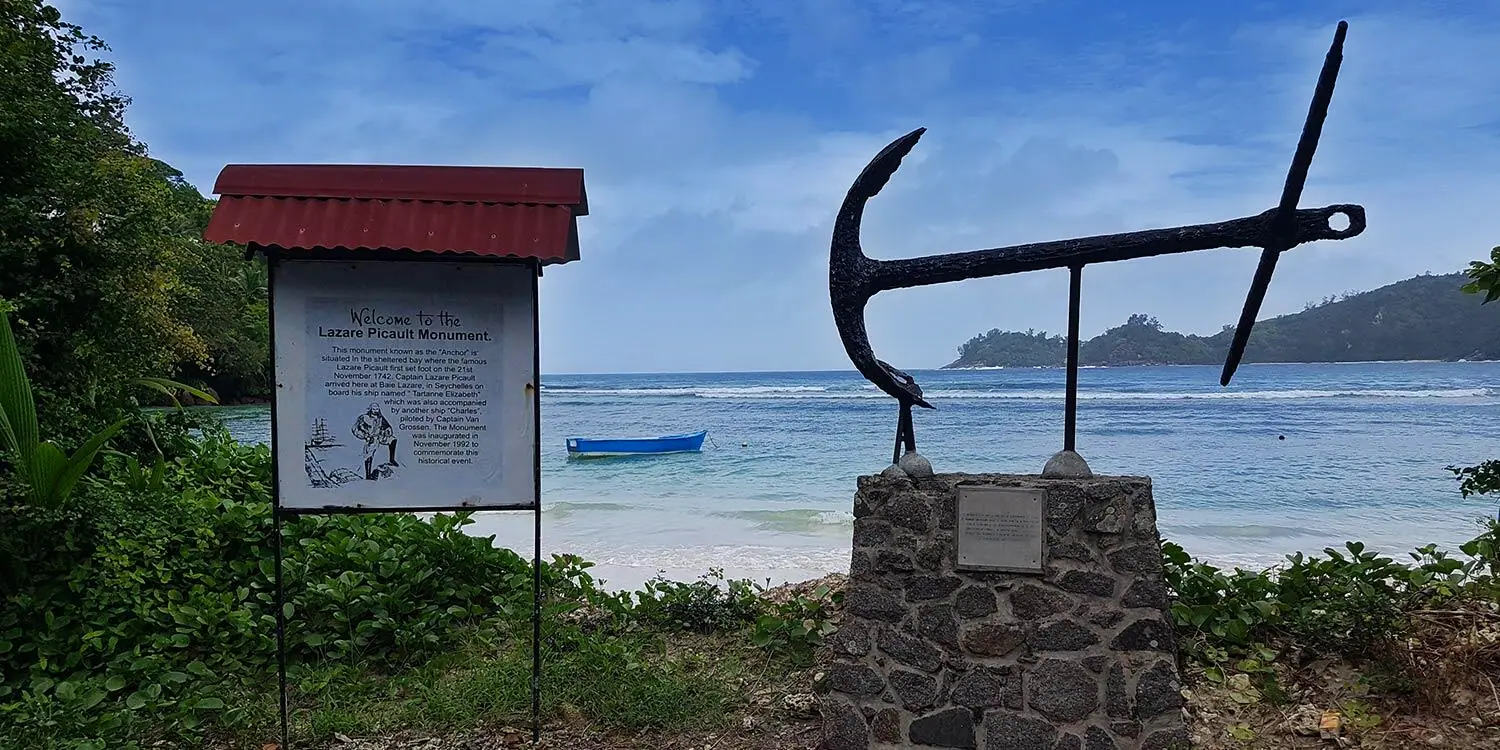
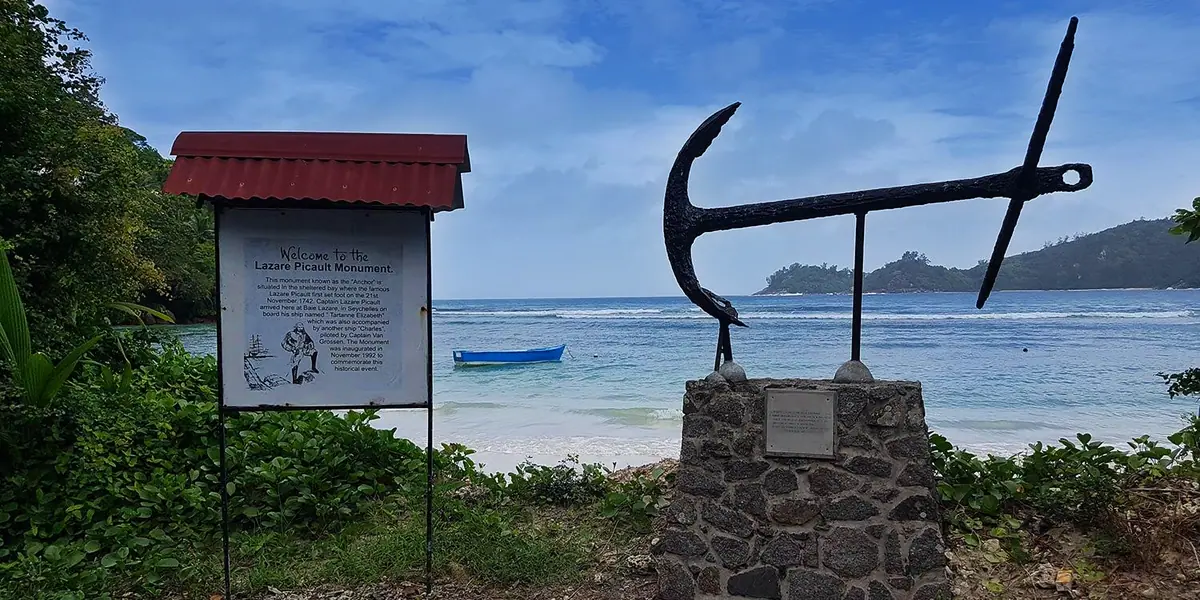
The history of the Seychelles began in August 1742, when Lazare Picault sailed into uncharted waters of the Indian Ocean with the ships Elisabeth and Charles, on the orders of the French admiral Bertrand François Mahé de La Bourdonnais. The expedition searched in vain for a place with drinking water. After three months, almost at the end of the voyage, the commander of the Elisabeth spotted an unusually high island, unknown to him, on 19 November 1742. At exactly 21 November 1742, late in the afternoon and shortly before sunset, the two ships reached the largest of the islands. Although darkness was close, a landing party under Lazare Picault decided to go ashore anyway, and was rewarded with plenty of fresh water, turtles and fish in the rivers. Lazare Picault therefore named the island L’Île d’Abondance, the Island of Abundance.
Picault realised that he had discovered a new, unknown group of islands, which would later become known as the Seychelles.
According to further records, Lazare Picault set out again on 7 December 1743 for the islands he had discovered, in order to explore them further. On 28 May 1744 he reached the island he had named earlier, L’Île d’Abondance.
The history of the Seychelles records that Lazare Picault then renamed the island Mahé in honour of Bertrand François Mahé de La Bourdonnais. On 15 June 1744 Picault set off on further voyages, first visiting the nearby island of La Digue, which he initially called Île Rouge because of its reddish granite rocks. He also visited Praslin, which he named Isle de Palmes for its large palm forests, and the island of Frégate, which he named after the large number of frigatebirds. The main island is known today as Mahé.
Lazare Picault, discoverer of the Seychelles
Earlier records by the Portuguese navigator Vasco da Gama from 1502 show, however, that Lazare Picault was not the first to see and set foot on the Seychelles. That year da Gama sighted the Amirantes, which belong to the outer islands of the Seychelles. The Portuguese had no plans to settle. Arab seafarers probably knew the islands long before. The first documented landing took place in January 1609, by the crew of the Ascension, a ship of the English East India Company, again without any settlement afterwards.
Even so, Picault is regarded as the discoverer of the Seychelles. The beach and bay of Baie Lazare, hotels and the district are named after him.
French settlement up to 1814
The Seychelles are a comparatively young nation. France laid claim to the islands in 1756, when Captain Corneille Morphey had a stone of possession set up. The name of the archipelago goes back to Jean Moreau de Séchelles, finance minister under Louis XV.
The first settlement of the islands can be dated to 1770: on 27 August around 28 people landed on Sainte Anne, French settlers accompanied by a small group of Africans and Indians, among them slaves. In 1778 the settlement of L’Établissement du Roi was founded on Mahé by the St. Louis river, and later became Victoria.
The islands remained in French hands until Napoleon's defeat. Between the first settlement and the cession to the British under the Treaty of Paris in 1814, the population rose to 3,500. During this time the people of the Seychelles encountered the enlightened policies of administrators such as Pierre Poivre and the manoeuvring of a Queau de Quinssy, but of course also the terrible effects of the French Revolution. As administrator, Queau de Quinssy repeatedly negotiated terms of capitulation with British ships and so spared the settlement from fighting.
British rule up to 1976
British troops took over the Seychelles after the fall of Mauritius in 1810/1811, and the Treaty of Paris of 1814 made this official. At first the islands were run as a dependency of Mauritius, and on 10 November 1903 they became a Crown Colony in their own right.
Under British rule the population of the Seychelles reached about 7,000 by 1825. Important plantations were established during this period, producing coconuts, food crops, cotton and sugar cane. In these years the settlement of L’Établissement du Roi was renamed Victoria (1841) and became the capital. A number of troublemakers from across the Empire were also sent into exile here. The period was likewise marked by the devastation of the tragic landslide of 1862 and by the economic effects of the abolition of slavery. After abolition in 1835, Indians, Chinese and Arabs also came to the islands, which helped shape today's mix of population (more under Society and Culture).
Independence and republic since 1976
From founding president to multi-party system
In 1976 the Seychelles gained independence from Britain, officially on 29 June, and became a republic within the Commonwealth with James Mancham as first president. France Albert René was prime minister at the time. With independence, Aldabra, Farquhar and Desroches, which had previously been detached, returned to the Seychelles. In the night leading up to 5 June 1977, supporters of René seized power in a coup.
After a period of one-party rule under the second president, France Albert René, he announced on 4 December 1991 the return to a multi-party political system. In 1993 the first presidential elections under the new constitution took place, and President René emerged as the winner. He also won the elections of 1998 and 2003, before handing over the presidency in June 2004 to James Alix Michel, who was elected president of the Seychelles again in democratic elections in May 2011 and December 2015.
The presidents of the Seychelles
| No. | President | Term of office |
|---|---|---|
| 1 | James Mancham | 1976–1977 |
| 2 | France Albert René | 1977–2004 |
| 3 | James Alix Michel | 2004–2016 |
| 4 | Danny Faure | October 2016 to 25 October 2020 |
| 5 | Wavel Ramkalawan | 26 October 2020 to 26 October 2025 |
| 6 | Patrick Herminie | since 26 October 2025 |
With the election victory of the opposition party LDS in 2020, the Anglican priest Wavel Ramkalawan became president. In the election of October 2025 he lost the run-off to the opposition candidate Patrick Herminie of the United Seychelles party. Herminie was sworn in as the sixth president of the republic on 26 October 2025 at Stad Linité.
Experiencing history on the islands
If you want to follow the history on the ground, start on Mahé in Victoria, the site of the first French settlement. Sainte Anne is the island of the first settlers in 1770. On Praslin there is a monument to independence in 1976. The Seychelles National Museums present the history and their collections; for opening hours and admission, please ask them directly. You will find further places to visit under Sights, and an overview of the islands under Islands of the Seychelles.
A short official account is offered by the Seychelles Tourism Board and the Seychelles National Museums.
Frequently asked questions
Who discovered the Seychelles?
The Frenchman Lazare Picault (1742) is generally credited as the discoverer. The first documented landing, however, took place as early as 1609, by the crew of the English ship Ascension, and Vasco da Gama sighted the Amirantes in 1502.
Since when have the Seychelles been independent?
Since 29 June 1976. The country has been a republic within the Commonwealth ever since.
Who is president today?
Patrick Herminie, since 26 October 2025 (as of November 2026).
Where does the name Seychelles come from?
The name recalls Jean Moreau de Séchelles, finance minister under Louis XV. Mahé is named after the governor La Bourdonnais.
Back to Climate & Weather or on to Seychelles Society