What makes the Seychelles special
The Seychelles lie in the Indian Ocean, north of Madagascar and just under five degrees south of the equator. There are granite islands with hills and rainforest, and flat coral islands. The three inhabited main islands, Mahé, Praslin and La Digue, are very different from one another. Then there are many smaller islands, which you will find in our list of Seychelles islands.
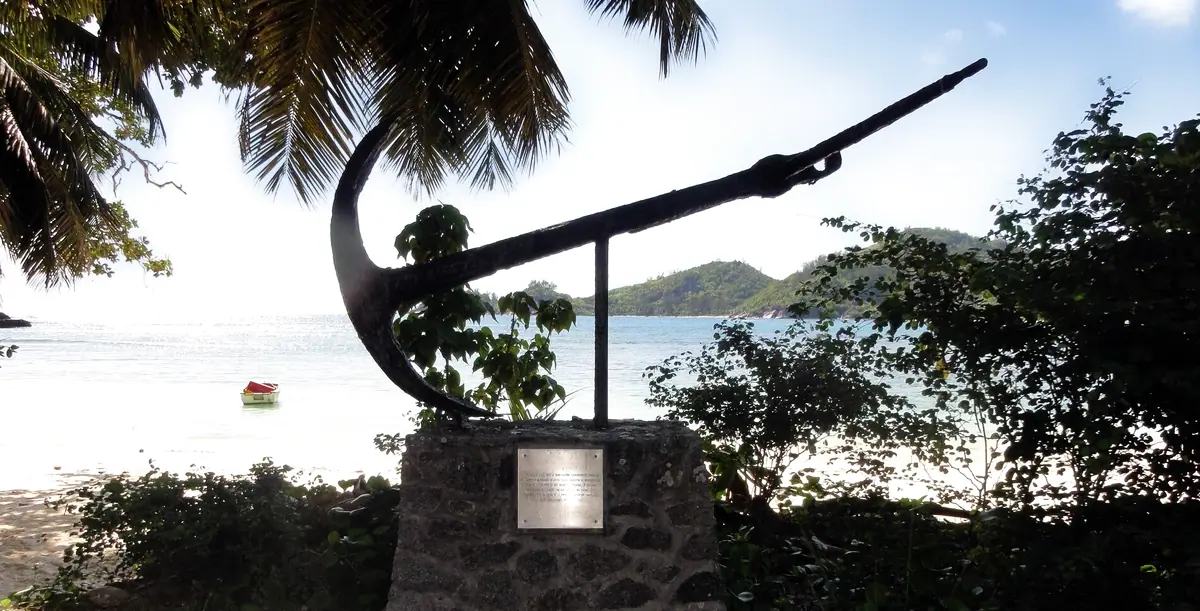
Thoughts at Anse Forbans that inspired me
Now the moment has come (or have I finally got there? Hmmm ...). I have been in the Seychelles for over five years now, at first on and off, and for over a year now permanently, and again and again I was, and still am, asked: Why? What makes the Seychelles special? What is it that sets them apart?
I have known the answer for a long time, but until now I never found the exact (and sooooo simple) word for it. So I always talked around it at length and gushed (sometimes a bit too much).
Editor's note: This text was written on 27 March 2012, and the time references relate to then. Karl Schnürch has now lived in the Seychelles for almost 20 years.
27 March 2012
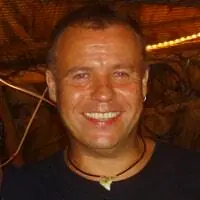
Author: Karl Schnürch
Source: own research
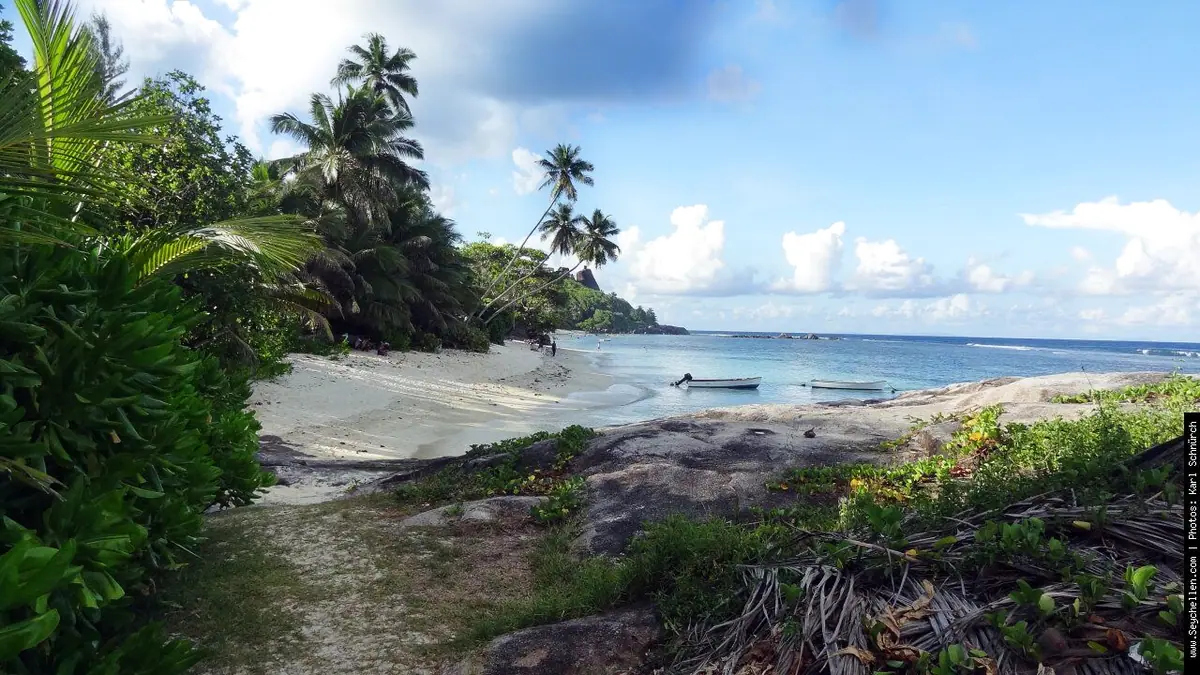
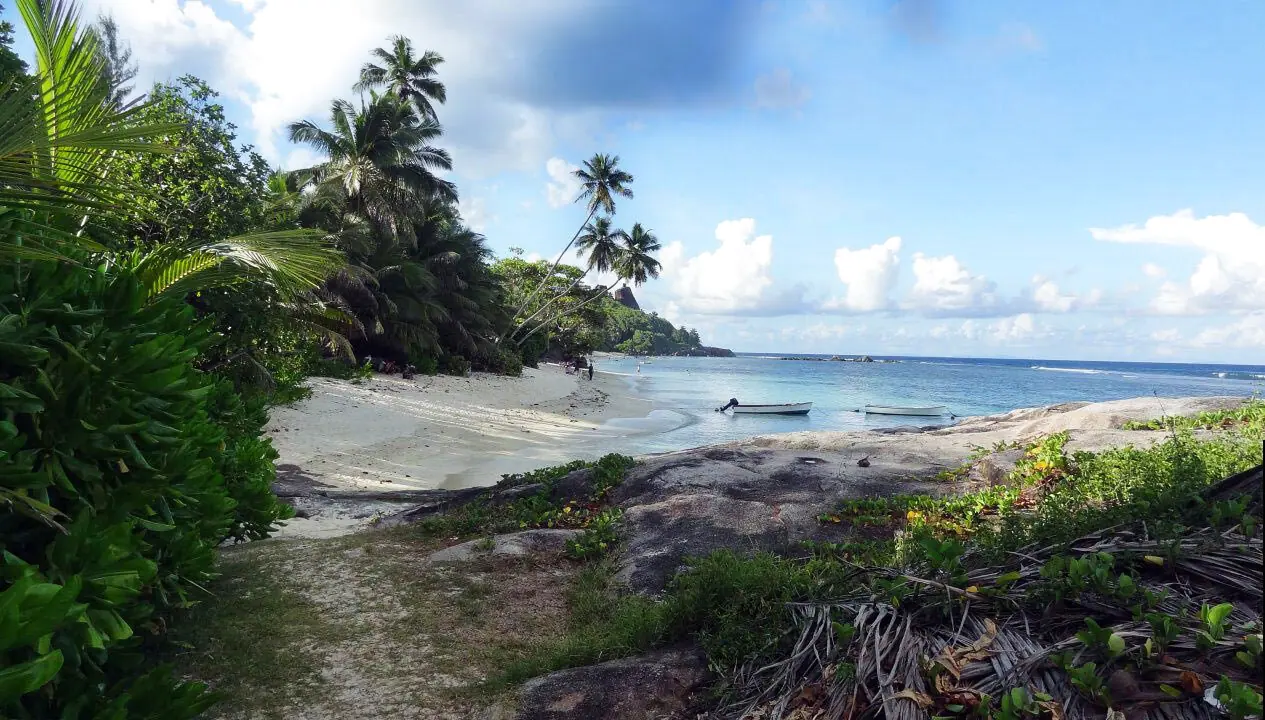
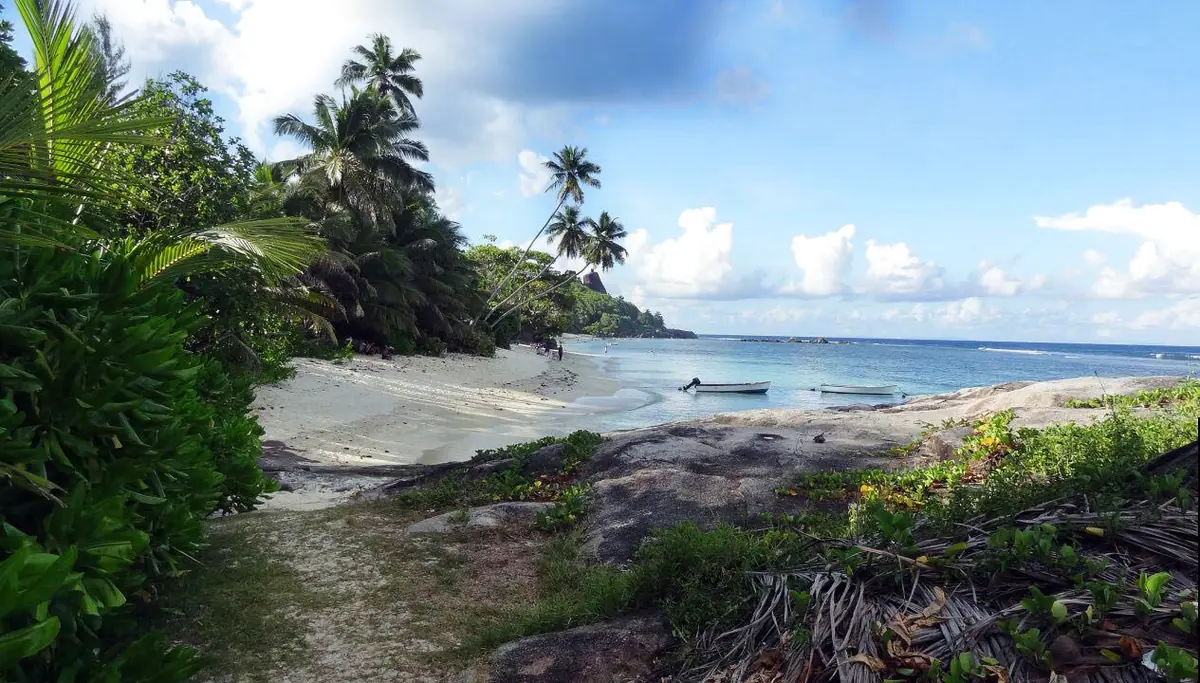
Now for the story, the moment it all clicked: today I was once again invited to a beach party at Anse Forbans for a birthday (this is not meant to sound arrogant, it is simply everyday life here and so almost completely normal). I was the guest of Seychellois who until then were almost complete strangers; I knew only the birthday boy and his wife. We turned up three hours late, by the way, which is perfectly fine in the Seychelles. What struck me again (as it has so often, but today far more consciously) was this: everybody, and I really mean everybody, whether grandmother, host, friend or toddler, went to such lengths to make sure I was doing well, and I wasn't even the one celebrating. To put this in context: I am rather the reserved type here in the Seychelles (that used to be completely different), but I always think (and live by it) that I am only a guest here, so I hold myself back completely and try not to show off (old friends will shake their heads at this point and laugh out loud), whether with knowledge or with luxury (what is luxury anyway?). But the people of the Seychelles are only truly happy, or so it seems to me, when everyone is truly well.
What I am getting at in these lines: I have often experienced, in all sorts of situations, that the Seychellois are special people. It starts with the traffic, for example when a vehicle blocks a lane and causes a tailback just because someone wants a little chat with an acquaintance, or when someone pulls out in front of you without a second thought, or simply potters along ahead of you at a very relaxed 20 km/h although you are in a hurry (why, actually?), and/or when you make a driving mistake yourself, and so on and so forth. In Germany or elsewhere in Europe, everyone would shake their head as they passed, tap their forehead at me or at the other driver, shout abuse, and at worst even lecture or report them. Here in the Seychelles it is completely different. Even so, I keep thinking: let's see what happens in a moment and how they react. I already picture myself exploding, but luckily there is usually someone in front of me who shows me how to deal with it properly, namely with a smile.
I have either long since unlearned this or never really learned it. And it works perfectly: you pass the "culprit" and smile or wave. A thumbs up is another popular sign to show that everything is fine and no harm done. The best part: you feel really good afterwards (and so do I). Quite unlike what you know from Germany, where you are still getting worked up about such situations hours or even days later.
There are so many other things that seem completely natural here, and I simply think: goodness, you could have thought of that yourself and done the same. Whether it is helping the fishermen for a moment to tie up their boat, helping an old lady with her shopping, taking a child who has just started crying into your arms (no problem even for a stranger), stopping when a car has broken down, answering people when they ask you something (they think, that's normal, I know it quite differently), perhaps just tossing a friendly "Hello, how are you?" into the room (wherever you are), or rather, simply treating the people around you in a friendly way, not patronising anyone, not being a know-it-all or, at worst, prejudiced and negative.
At the beginning, when I first came to the Seychelles, many Seychellois said to me "be calm" or "be patient, my friend" (which, because of my poor English back then, I always mixed up with "passion"), and I did not really understand it. What I want to say is this: everything in the Seychelles simply moves three beats slower, much more relaxed and far friendlier than you know it from hectic Germany or the Western world, and I still have a lot to learn here.
Oh yes, the word I searched for so long was and is "consideration" (there is surely a reason why it escaped me for so long ...).
Consideration in daily life: what visitors can expect
What Karl Schnürch describes, you will meet as a holiday-maker too: on the bus, in the shop, at the hotel reception. The official languages are Creole, English and French. English will get you by everywhere, but a friendly "Bonzour" (Creole for "good morning") quickly opens doors.
- Pace: Appointments and departures are often more flexible than you are used to. Allow some buffer time, especially on the day you leave. Check the opening hours in advance.
- Traffic: Traffic drives on the left, and the roads are winding and narrow. If you take a hire car, it is best to drive as calmly as the locals do.
- Manners: Greeting, asking and listening are part of daily life. You will find more tips on behaviour in the Do's and Don'ts, and more about the people under Society and Culture.
Planning your trip: entry, getting there, when to go and fees
Entry
Getting there
The international airport is on Mahé. There are nonstop flights from Frankfurt, with a flight time of around 9 hours 40 minutes. Condor also lists flights from Munich for winter 2026/27. There are also connecting services, for example via the Gulf region, Istanbul or Addis Ababa. Flight schedules and days of the week change with the season, so check them when you book. For the journey from the airport, see Airport transfer.
When to go
The Seychelles are warm all year round. From November to March the northwest monsoon blows, and from May to September the southeast trade wind. April and May, as well as October and November, are calmer, since they are the transitional months in between. Depending on the wind, seaweed collects on some beaches. In that case, choose accommodation on the sheltered side. More under Best time to travel and Climate and weather.
Levies at your accommodation
The Tourism Environmental Sustainability Levy is charged per person per night and settled through your accommodation. Since 1 January 2026 it no longer applies in small establishments. Ask before booking whether it is included in the price or payable on site. The rates (as of November 2026):
| Accommodation | Levy per person per night |
|---|---|
| Small (1 to 24 rooms) | discontinued since 1 January 2026 |
| Medium (25 to 50 rooms) | SCR 75 |
| Large (51 rooms and above), island resorts, yachts | SCR 100 |
Residents of the Seychelles are exempt. You can find the official notice on the Ministry of Finance website.
Which island suits you?
| Island | Character | Suited to |
|---|---|---|
| Mahé | Largest island with the airport and capital Victoria, the most accommodation, restaurants and beaches | Those who want plenty of choice and freedom to move around |
| Praslin | Second-largest island, known for the Vallée de Mai nature reserve and quiet bays | Those who want to combine nature and beach |
| La Digue | Small island, getting around mainly by bicycle, slow pace | Those who seek tranquility |
The Cat Cocos ferry and domestic flights run between the islands, and boat tours offer further options. If you are coming for the first time, you will find help under Your first visit to the Seychelles. You can book accommodation via Hotel booking or Holiday home booking. For an overview of all destinations, see the page Islands of the Seychelles.
Frequently asked questions
Do I need a visa for the Seychelles?
No, but the Travel Authorization is compulsory before departure (see the Entry section).
When is the best time to travel?
April, May, October and November are the calmest months. It is warm all year, and the wind decides which beaches are calm.
How long is the flight from Germany?
Nonstop from Frankfurt it takes around 9 hours 40 minutes. With a connection it takes longer.
How do I get from island to island?
By ferry between Mahé, Praslin and La Digue, by domestic flight or on a boat tour. Practical advice is on the page Seychelles from A to B.
Where can I find more travel tips?
Under Travel tips and in the Travel checklist. For safety and emergencies, read Crime and Hospital, clinics and emergency numbers.