Best time to go and conditions
Diving and snorkelling all year round
You can dive and snorkel in the Seychelles all year round, but underwater visibility is best during the monsoon changeover periods (March to May and September to November). Around the turn of the year the sea surface is a little choppier, while during the south-east monsoon (May to September) the wind is generally stronger and seagrass is often washed up on the south-east coasts, which makes those beaches unsuitable for snorkelling at that time. Water temperatures near the surface always stay between 25 and 30 °C. Only at greater depths, which can be reached only at the edge of the Seychelles plateau and around the Outer Islands, does the temperature drop below these values.
In the calmer months visibility often reaches about 30 metres. Because the wind comes from a different direction depending on the season, dive centres prefer to head for the sheltered coast: the north-west of Mahé can be dived well for much of the year, the north-east mainly from December to March. When you book, ask which sites are visited at the time of your trip. For more on wind and rain, see Climate & Weather and Best Time to Visit.
Whale sharks
The whale shark season runs from August to November, with most sightings in October. The bay of Beau Vallon on Mahé lies on the animals' migration route. An encounter is never guaranteed, and operators usually report sightings at short notice.
Dive sites
Mahé and the Sainte Anne Marine National Park
There is a wide choice of dive operators on the islands. Shore dives and live-aboard trips are both on offer, so wherever you are staying, the chances of getting out for a dive are good.
Every dive centre has its favourite areas, with remarkable scenery or fascinating marine life, or both. Most dive centres are right on the beach, so it is only a short hop by boat to several dive sites. The natural world will leave you with lasting memories of your dive trip. Dive centres and operators also make a point of giving you the best service, which includes not overcrowding the boats.
A shallow-water trip into the Sainte Anne Marine National Park, surrounded by its neighbouring islands, gives you an insight into the impressive variety of fish. The different rock formations under the sea are home to an extraordinary range of species. 'Turtle Rocks', for example, lies off the east coast of Mahé. Here you mostly find stingrays, sharks and soldierfish. Around 'Vista Rocks' and 'Sunset Rocks' in the north-west, on the other hand, you will find lobsters, octopus, snappers and scorpionfish.
Wrecks and drift diving
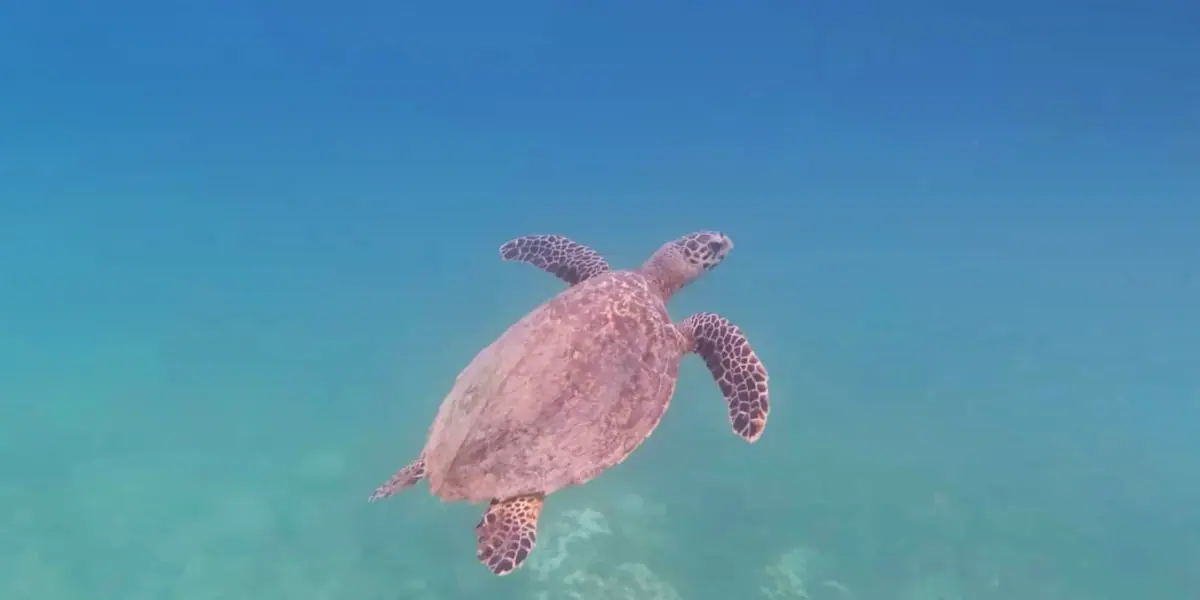
Experienced divers can look forward to the wrecks of the 'Ennerdale', the 'Twin Barges' and the 'Dredger', with their sharks, groupers, rays and pelagic fish. The 'Twin Barges' lie at a depth of about 12 to 24 metres, the 'Dredger' at about 18 to 26 metres. If you prefer drift diving, 'Lighthouse' with its impressive coral formations is the place for you. Besides the corals, you will also see graceful hawksbill turtles, shoals of reef fish and moray eels.
South of Mahé
If you head to the south of Mahé, you will be spoilt for choice between excellent dive sites such as the granite formation 'Jail House Rock' or the beautiful corals of 'Alice in Wonderland'.
Praslin, La Digue and surroundings
Around 20 dive sites can be reached from Praslin, many of them only about 18 to 20 metres deep and therefore suitable for beginners too. They include the sites around Curieuse, the Sister Islands (Grande Sœur, Petite Sœur) and La Digue. The Sister Islands are at their calmest between March and May. St Pierre and the 'White Bank' are also often recommended for beginners. You will find a list of individual sites under Dive spots and diving in the Seychelles.
Coral reefs and the Outer Islands
You can find places to dive practically everywhere. Near the granite islands the sea is mostly no more than 30 metres deep and consists of coral reefs and rocky drop-offs, where countless colourful tropical fish dart about, along with the occasional shark, which may be curious but is not aggressive. Near the Inner Islands some coral reefs were bleached by a temporary rise in sea temperature caused by the El Niño effect, but these formations have since recovered quite well, and around the Outer Islands the effects were less pronounced anyway. The waters around Desroches are regarded as some of the best for diving.
Live-aboard dive operators give you the chance to travel further than Praslin and La Digue and to visit magical-sounding islands such as Desroches. Diving in the fascinating canyons and caves off Desroches, or among countless corals and steep drop-offs at Alphonse, is an incomparable experience.
Some dive operators offer extra activities such as beach barbecues or picnics on a small, secluded beach, where you can relax and swap diving stories. Others offer exciting night dives in a moonlit ocean. It is worth combining dives with such extras, as they add to the experience.
Snorkelling
Besides the dive sites, there are also wonderful snorkelling spots, even if you will not find them right in front of your hotel. The most interesting reefs can usually be reached only by boat, but the rocky sides of the sandy bays can also be reached from the shore. Good snorkelling spots around Mahé are the Sainte Anne Marine National Park, Baie Ternay, Anse Soleil and Petite Anse. From Praslin, the sides of the bay at Anse Lazio, the area off Anse La Farine and the stretch of coast opposite the island of Curieuse are recommended. Off La Digue you can snorkel very well on the west side. The coral islands of Denis and Desroches are also well worth a visit.
Day trips to the Sainte Anne park leave from Victoria, usually with one to three snorkelling stops. More on this under Boat Tours. In bays with rocky sides, do not swim out as far as the open edge of the reef, as there is often a current there.
Dive centres, costs and park fees
Dive centres can be found in Beau Vallon and on Eden Island (Mahé), in Anse Volbert (Praslin), on La Digue, on Silhouette and on Alphonse, among other places. Prices differ considerably depending on the island and the operator. The following guide prices come from comparisons of operators; only the price list of the individual dive centre is binding.
| Service (as of November 2026) | Guide value |
|---|---|
| A guided boat dive on Mahé | approx. 60 to 110 € |
| A guided boat dive on Praslin | usually 10 to 20 € more than on Mahé |
| Discover scuba diving without certification, one dive | from approx. 120 € |
| Open Water course | approx. 450 to 600 € |
| Package with several dives | saves about 8 to 15 € per dive |
| Equipment | included in the price at many bases, often an extra charge at resorts |
| Marine National Park (as of November 2026) | Entry fee per person and day |
|---|---|
| Sainte Anne | SCR 200 |
| Baie Ternay & Port Launay | SCR 200 |
| Cocos (Île Cocos) | SCR 200 |
| Curieuse | SCR 300 |
Rules, safety and nature conservation
Divers and snorkellers are asked to follow the rules that protect the underwater environment. The principle is simple: take nothing away except photographs. It goes without saying that damaging the coral reefs while diving is also forbidden. Spearguns are banned outright. You can read more about protecting the islands under Nature and Conservation.
Frequently asked questions
Can I dive without a diving licence?
Yes, as a introductory dive with an instructor, usually from the age of 10. If you would like to take a course, the larger dive centres on Mahé and Praslin offer Open Water courses.
Where can beginners dive?
Shallow sites such as those in Sainte Anne Marine Park, at St. Pierre or on the granite reefs off Praslin are a good choice, as depth and currents are usually modest.
Can I snorkel from the beach?
Yes, along the rocky sides of many bays, for example at Anse Lazio. During the south-east monsoon (May to September), south-east coasts are not very suitable because of seagrass washing in.
Do I have to bring my own equipment?
No, the dive centres hire out equipment. However, a mask and snorkel that fit you well are usually more comfortable, so it is worth bringing your own. You will find a packing list under Travel Luggage.
Back to Fishing or on to Getting around the Seychelles