Protected areas and World Heritage
Conservation and environmentally conscious management of tourism and the infrastructure that goes with it are not empty phrases in the Seychelles, but everyday reality. According to the 2026 "State of Biodiversity Action" report by the Secretariat of the Convention on Biological Diversity, 48.1% of the land area and 32.6% of marine areas are protected. In terms of land, the island republic is among the world's front runners.
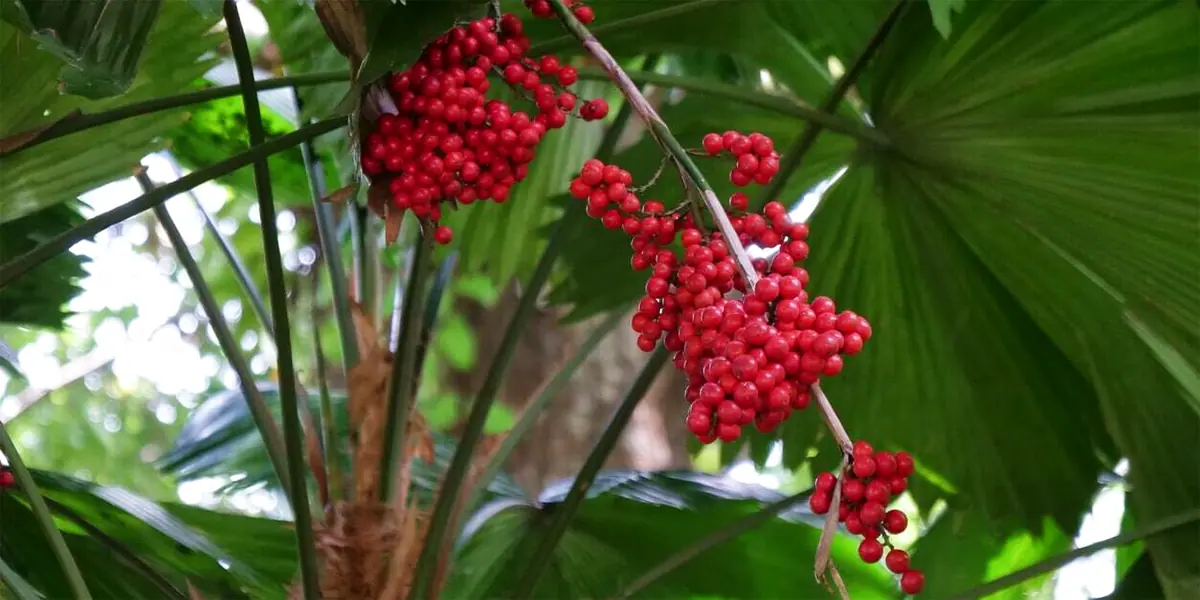
Two nature reserves are recognised by UNESCO as World Heritage Sites: the Vallée de Mai on Praslin and Aldabra Atoll. Both are managed by the Seychelles Islands Foundation (SIF), a public foundation. You will find more on wildlife and plants under Flora and fauna of the Seychelles.
Watching wildlife and plants
Best time
Seasons make little difference to the plants, but if you are travelling mainly for the wildlife, find out beforehand when each species is most likely to be seen. The best time for birdwatching, for example, is April to October.
Whale sharks are the largest fish in the world, yet harmless to humans. They feed mainly on plankton, which rises to the upper layers of the water during the season. The movements of these animals are monitored and recorded in the Seychelles, so boats can reach them quickly. You can join the whale shark observers and swim or dive with the animals. The income from participation fees benefits the programme. When sightings are most frequent varies from year to year, so ask about the current window when you book. For general advice on the weather, see Best time to travel, and for outings, see Boat trips and Diving and snorkelling.
Islands for nature lovers
For nature lovers, the following islands are of particular interest: Aride, Cousine and Curieuse, as well as North Island (North), Cousin, Frégate, Silhouette and Bird. Here animal and plant species are preserved, new or originally native species are even being reintroduced or replanted, and traces of earlier human interference with nature have been removed.
Experiencing nature on Mahé, Praslin and in the World Heritage sites
You do not necessarily have to make a trip to a small island or stay there overnight. The main islands of Mahé and Praslin also offer fascinating glimpses of the unique fauna and flora, including some very rare species.
Morne Seychellois National Park on Mahé
In the high-lying Morne Seychellois National Park you will find species that exist nowhere else. The park covers 30 km² and takes in a large part of the mountain region in the north and west of Mahé, including the highest peak, the 905-metre Morne Seychellois, after which it is named. Access to the park is along the Sans Souci Road: at Mission Lodge and via the trails to Morne Blanc, Copolia and Trois Frères, all of which are waymarked. Bring sturdy footwear and rain protection, as it rains more often in the mountains than on the coast. For route suggestions, see Hiking.
Vallée de Mai on Praslin
The Vallée de Mai (Maital) on Praslin is very easy to explore on foot. The valley, with a stream running through it, is served by several waymarked paths that allow both short and longer circular walks. At the entrance you receive a leaflet with information and route descriptions when you pay the admission fee, and the shop in front of the entrance sells more detailed literature. According to the SIF, the leaflet also includes a trail map and a species list. Allow at least two hours.
According to the Seychelles Islands Foundation, admission is SCR 450 per person (as of November 2026). You can pay in rupees, euros, US dollars or pounds, in cash or by credit card. The fee also helps fund the running of Aldabra, which lies more than 1000 km from the inhabited islands. Current opening times and guided tours are listed on the SIF website. The foundation also looks after the Fond Ferdinand nature reserve on Praslin.
Aldabra Atoll
A side trip to Aldabra is much more difficult. Travellers basically have two ways to visit the atoll: on a larger cruise that offers a landing here, or on a small cruise from Mahé, for example with the expedition ships Indian Ocean Explorer or Maya's Dugong. Check the offer and dates with the operator before booking. The atoll consists of four islands enclosing a lagoon of about 155 km². Because it was unsuitable for human settlement, a unique habitat has remained largely intact here.
No visit is possible without permission from the SIF. On organised trips the operator usually applies for it. On land, foundation staff accompany visitors. There are no hotels, restaurants or other visitor facilities on the atoll.
| Protected area | Location | Access |
|---|---|---|
| Morne Seychellois National Park | Mahé, mountains in the north and west | Marked trails from Sans Souci Road |
| Vallée de Mai (World Heritage) | Praslin | Entry SCR 450 (as of November 2026), trails at your own pace |
| Aride, Cousine, Curieuse | Islands north and east of Praslin | Only by boat, usually as part of a tour |
| Aldabra (World Heritage) | Outer islands, over 1,000 km from the inhabited islands | Only with SIF permit, usually by expedition ship |
Rules and levies for visitors
You will find more rules of conduct under Do's and Don'ts, and information on exporting natural products under Customs regulations.
Frequently asked questions
Do I have to pay admission to nature reserves?
That depends on the area. In the Vallée de Mai, admission is SCR 450 per person (as of November 2026). For island reserves and marine parks, fees are usually charged through the tour operator or on site. Ask when you book what is included.
Can I visit Aldabra on my own?
No. Access is restricted and requires permission from the Seychelles Islands Foundation. The usual way is to join an expedition cruise, whose operator submits the application.
Do I also pay the environmental levy in a guesthouse?
Not in small accommodation with 1 to 24 rooms. For medium-sized and large establishments, island resorts and yachts, the rates in the note above apply. Children up to 12 years are exempt.
When is birdwatching worthwhile?
Best between April and October.