What to expect
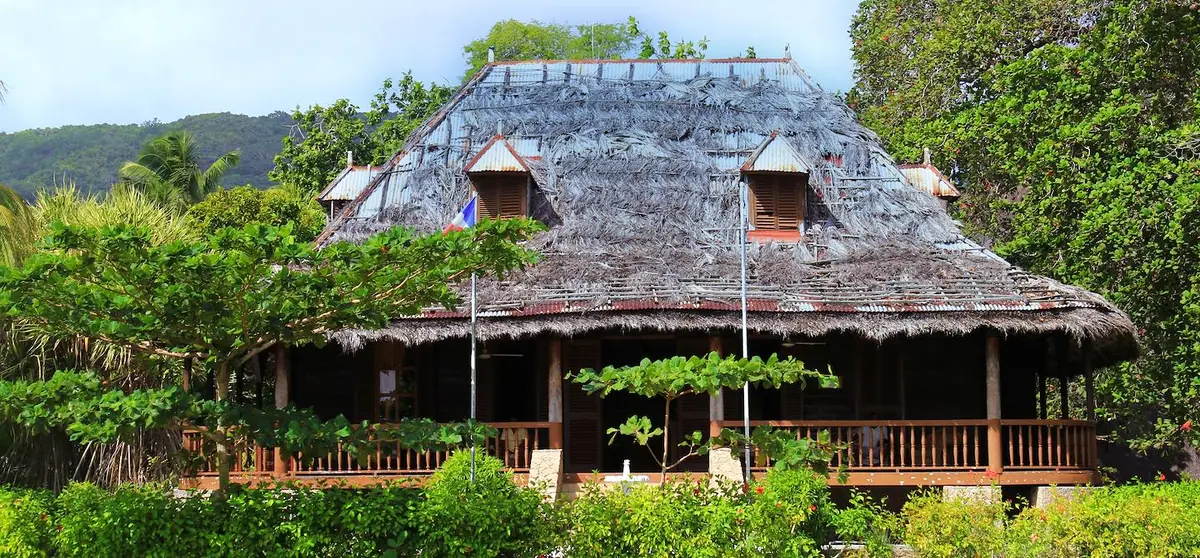
The La Veuve Reserve Information Centre is the only environmental office on La Digue. The office looks after the La Veuve Reserve and environmental matters on the island. Here you can find plenty of information about La Digue's unique flora and fauna, and especially about the paradise flycatcher, known locally as the 'Veuve'. The staff regularly monitor the numbers of paradise flycatchers, the rare swiftlets and the sea turtles, and once a year they also count the more common bird species.
The staff offer a short guided tour, during which you can see nesting sites and birds, as well as walks outside the reserve. Please register in advance.
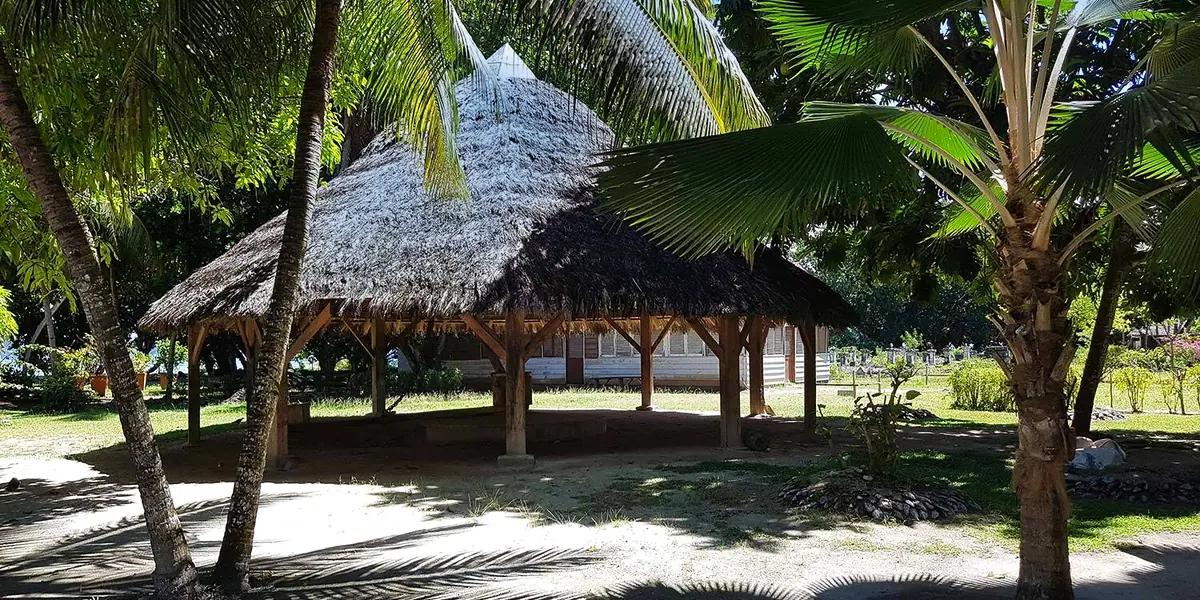
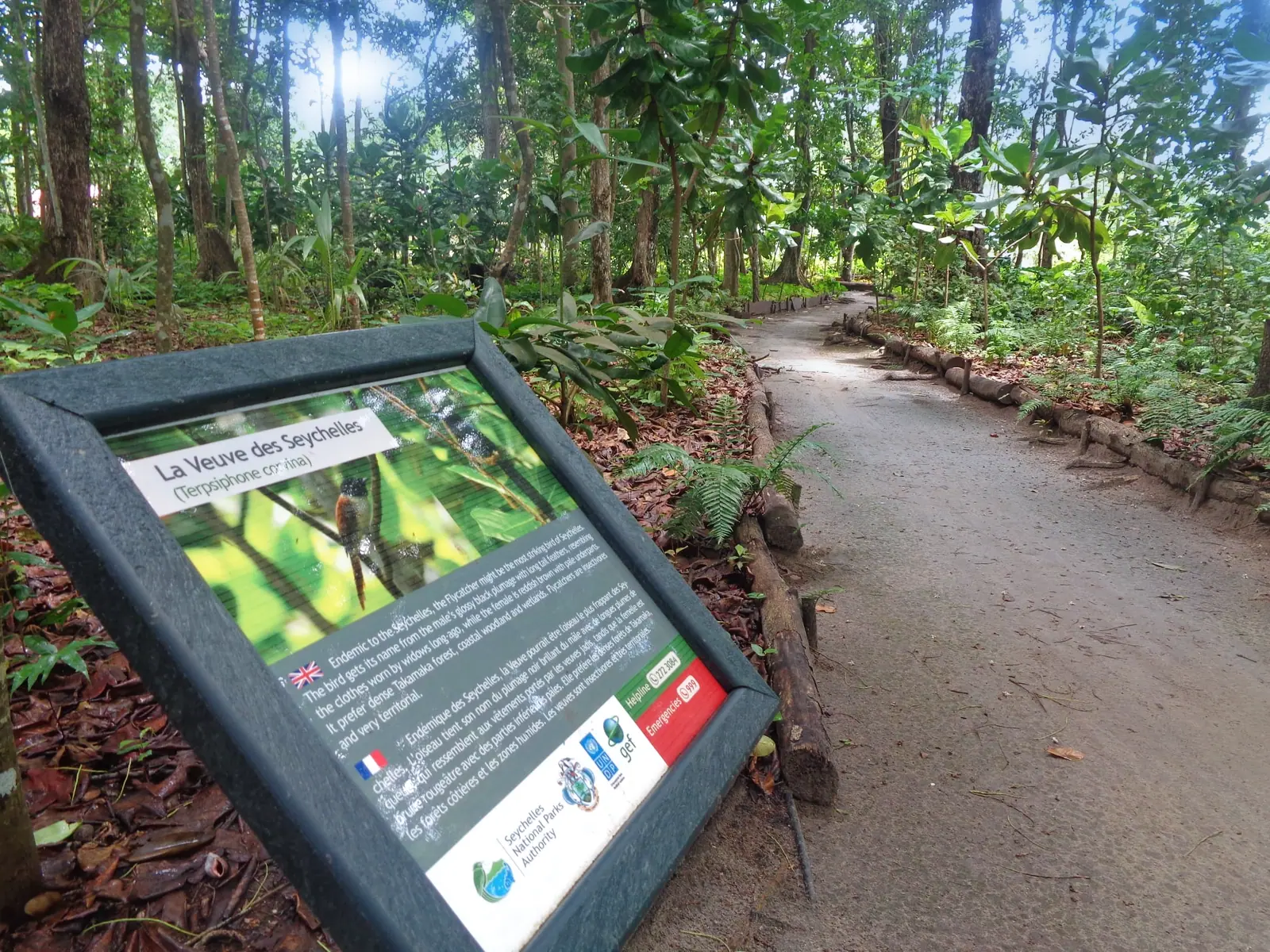
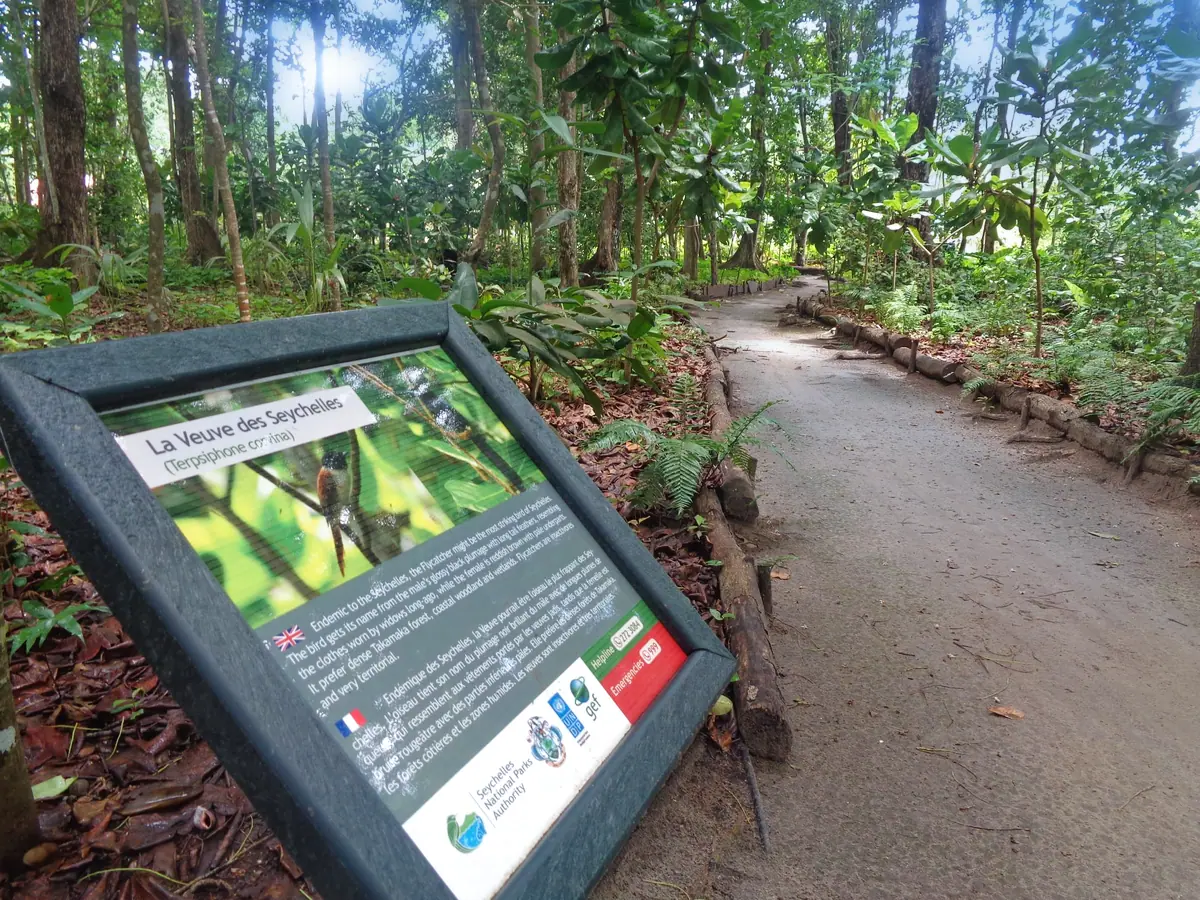
The reserve is an area of woodland with walking trails, along which signs explain the plant life. Besides the paradise flycatcher, it is home to fruit bats, freshwater turtles and rails, among other animals. The information centre at the entrance has a small exhibition on the birds and nature of the Seychelles. Whether it now sells souvenirs, postcards and books, as was once planned, I could not confirm.
The Veuve and its forest
The Seychelles paradise flycatcher (Terpsiphone corvina) lives only on La Digue. The males have a long black tail, which gave the bird its Creole name "Veuve" (widow). It depends on dense, shady forest with plenty of insects. Where this forest disappeared from La Digue's plateau, the population declined as well.
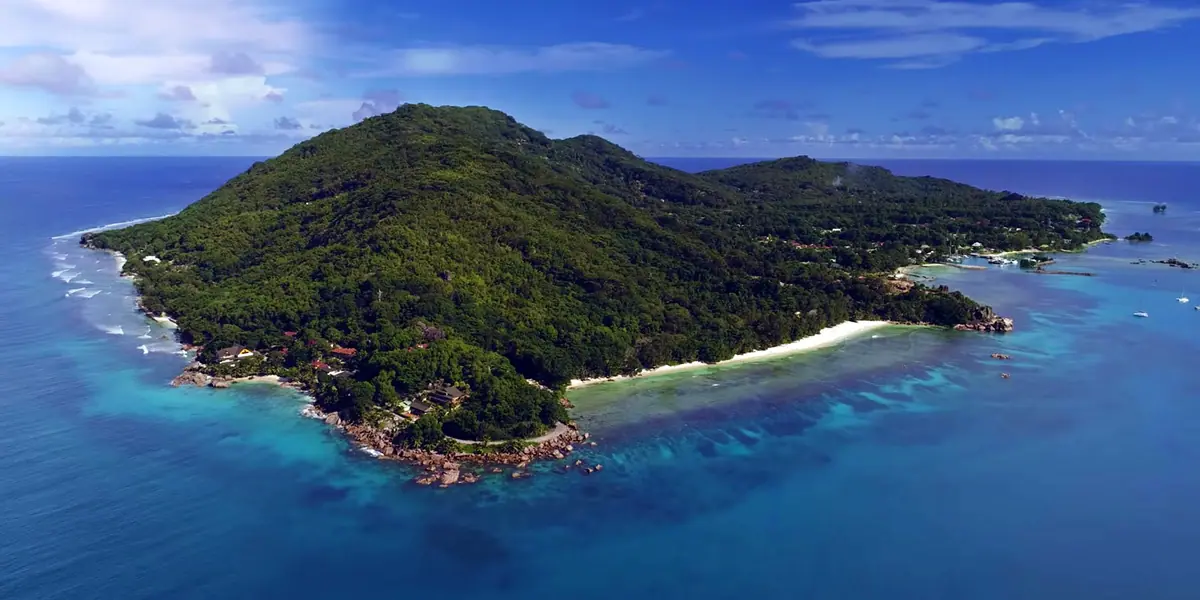
The reserve is part of a plateau of around 200 hectares in the west of the island and covers 21 hectares. The idea of a protected area was first raised in 1980/81. According to the park authority, the area is not large enough on its own to support a stable population, but it remains important because more and more hardwood trees are being felled outside it. The species is classed as vulnerable (IUCN). At the end of 2018 a number of birds were relocated to the island of Curieuse in order to establish a second population there. For more background, see Flora and Fauna and Nature and Conservation.
Getting there
Getting to La Digue
The island can only be reached by boat. The crossing from Praslin takes about 15 minutes, and from Mahé the Cat Cocos sails (see Ferry). Both ferries dock at La Passe.
| Route | One-way fare, adults (as of November 2026) |
|---|---|
| Praslin and La Digue | 15 € plus 1 € port fee |
| Mahé and La Digue | 68 € plus 2 € port fee |
From La Passe to the reserve
The reserve lies near Anse Réunion (Anse La Réunion), about 2 km from the jetty. As everywhere on the island, the best way to get there is by bicycle, and on foot it is a walk of a good half hour. There is no bus service on La Digue. If you are heading on to Grand Anse, or to L’Union Estate and Anse Source d’Argent, the visit fits in easily along the way.
Opening hours and admission
| Day | Opening hours |
|---|---|
| Monday to Friday | 8:00 to 16:00 |
| Saturday | 9:00 to 15:00 |
| Sunday | no fixed time, on demand |
| Visit (as of November 2026) | Admission, non-Seychellois aged 12 and over |
|---|---|
| Without guide | 150 SCR |
| With guide | 200 SCR |
Duration, best time and tips
One to two hours is enough for the walk. The birds are small and often hide in the foliage, and with a guide you will find them more quickly, because the staff know the territories. In my experience the forest is quietest in the early hours and after rain. For the weather, see Climate and Weather.