What to expect
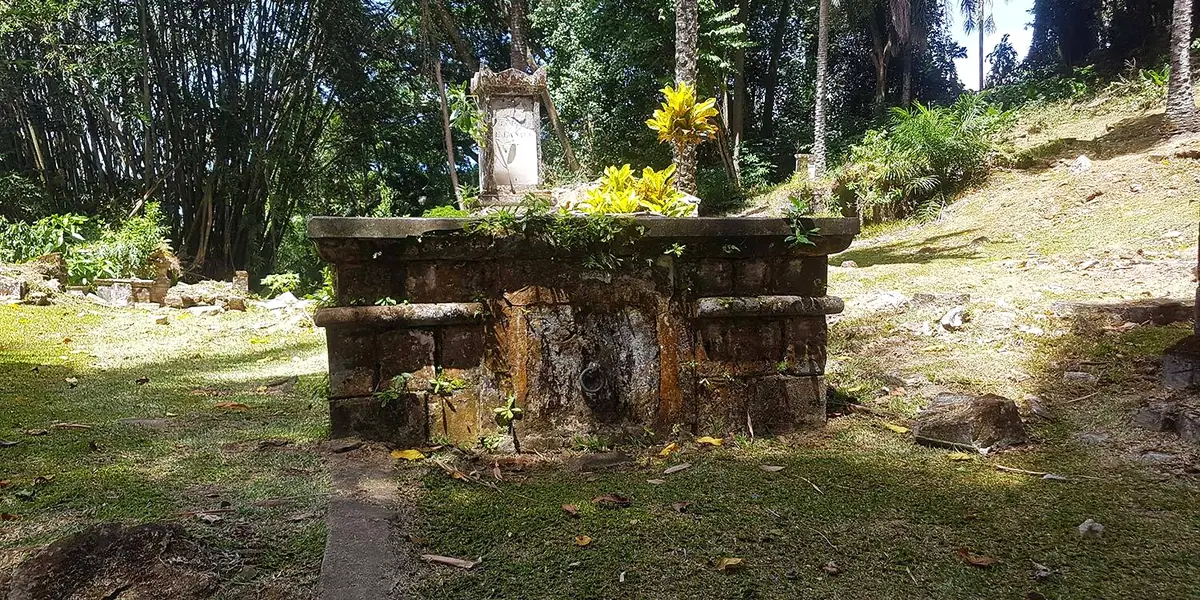
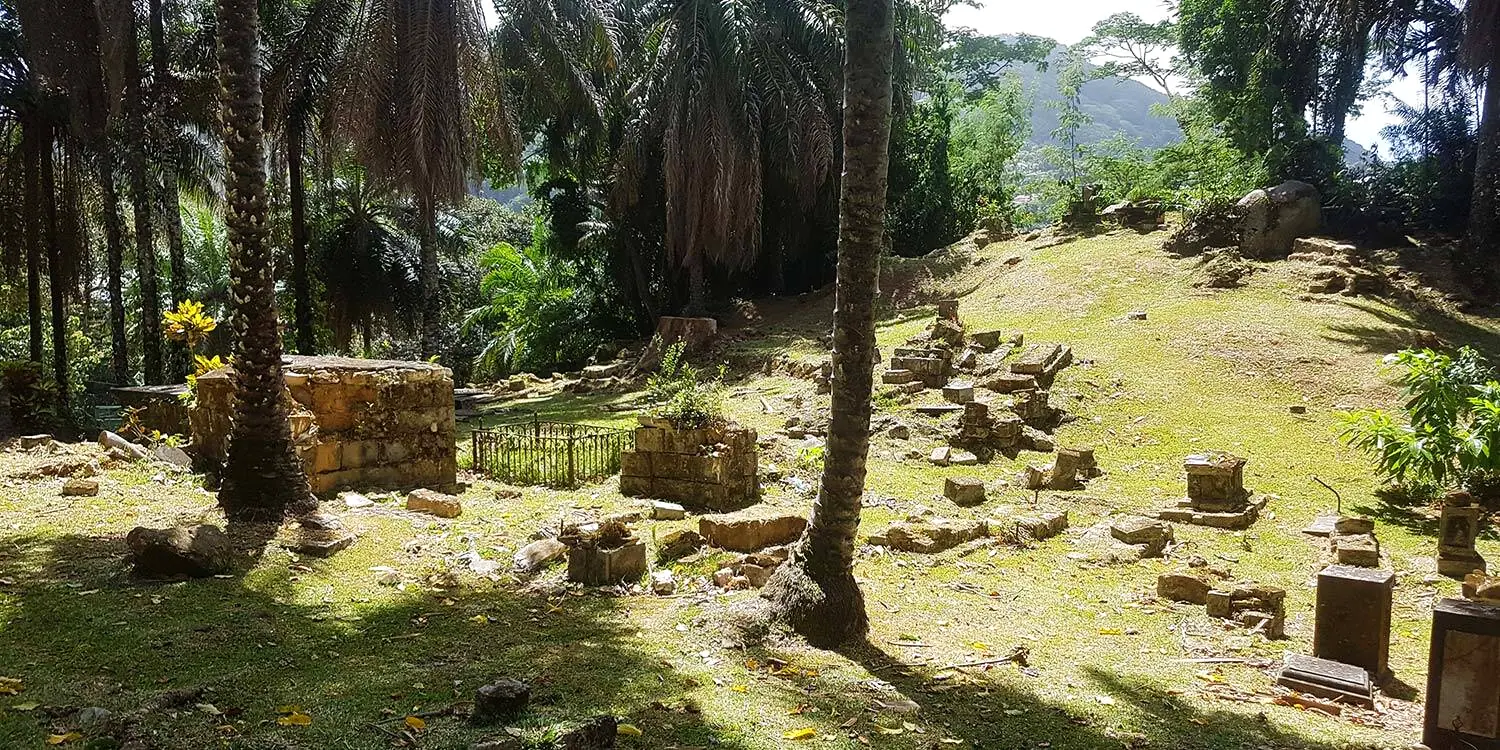
Bel Air Cemetery is without doubt the oldest historic site in Seychelles. It was opened soon after the French settlement in the late 18th century, which made it the first official burial ground on Mahé.
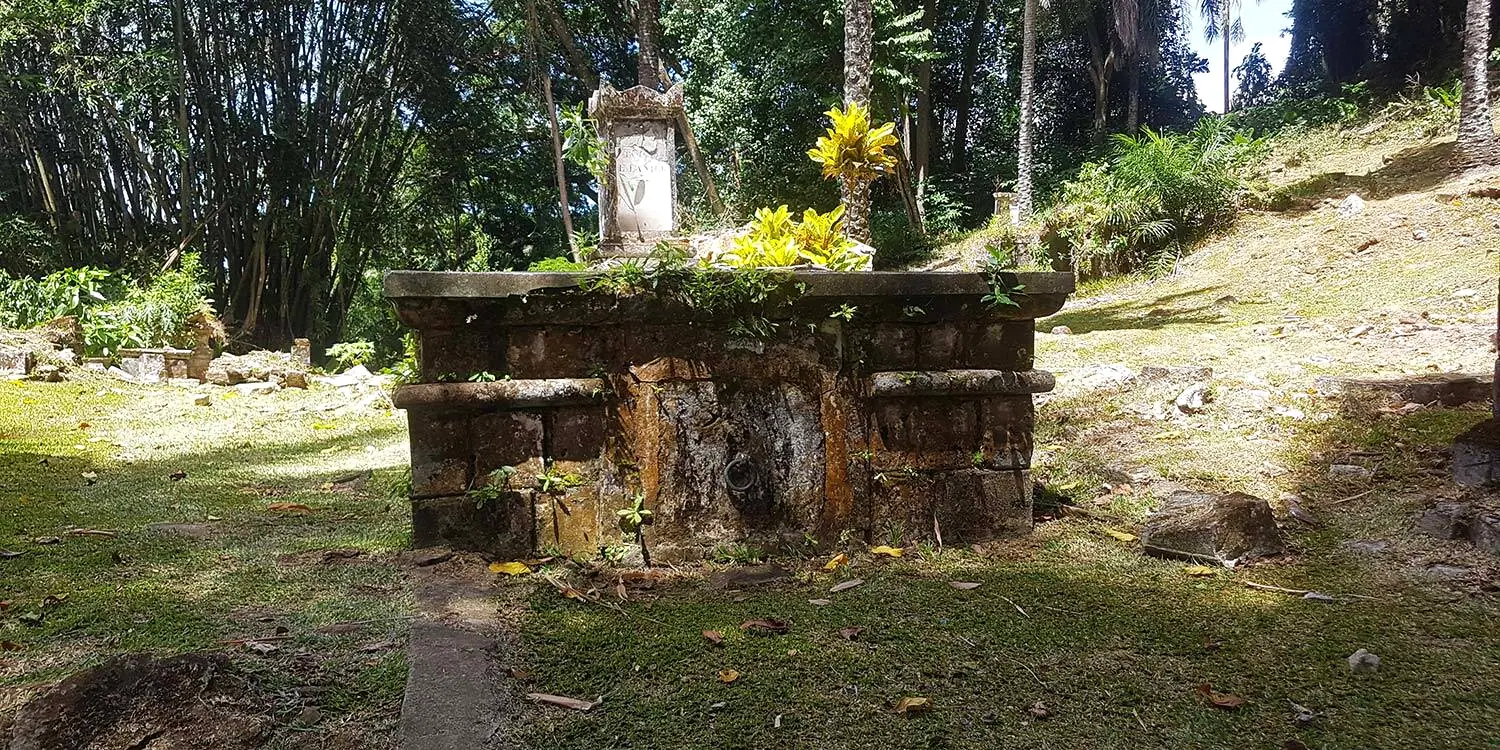
Its graves, vaults and shrines hold the remains of many well-known figures and serve as important historical milestones. They include the corsair Jean-François Hodoul and Charles Dorothée Savy, who stood 9 feet (274.32 cm) tall and was poisoned at the age of 14 by neighbours who feared his size. The story of the "giant boy" is still one of the best-known Creole tales about the cemetery.
The cemetery also holds the remains of the mysterious Pierre-Louis Poiret, whom some believed to be a son of Louis XVI. He is said to have fled the French Revolution and sought refuge in Seychelles.
It is also the last resting place of a son-in-law of Jean Baptiste Quéau de Quincy, a district official and magistrate. The grave lies among other recently rediscovered graves that were once buried by the great landslide of 1862.
History of the cemetery
The French founded the settlement of L’Établissement du Roi in 1778, which later became Victoria. The cemetery followed shortly afterwards. Sources give the opening as somewhere between the early and late 1780s. Most of the early settlers were buried here, many of them from France and from the island of La Réunion. Burials continued until 1902, when the cemetery was officially closed. It was later given the status of a national monument (in the 1980s).
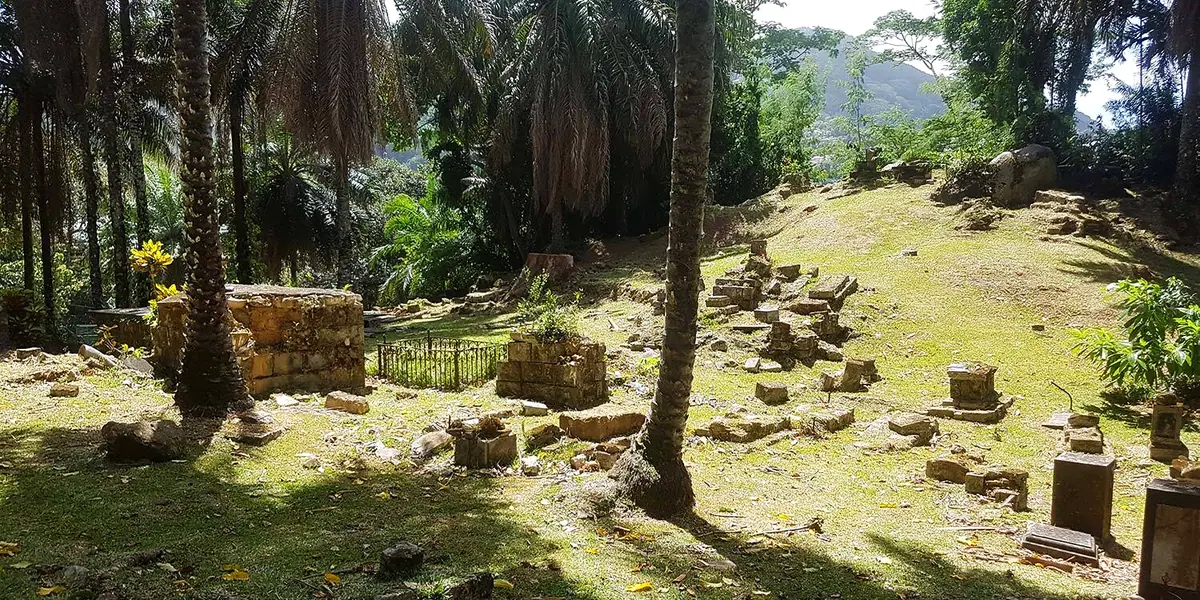
Two events shaped what you see today: the flood and landslide of October 1862 buried parts of the site, and in 1883 victims of a smallpox epidemic were also buried here. What remains are fragments: collapsed vaults, broken grave slabs and rusty wrought-iron crosses, with palms and shrubs growing between them. France and La Réunion have promised support for restoring the graves. Many graves no longer have a headstone, so not every burial can be clearly identified.
Getting there
Directions: From Victoria, take Revolution Avenue towards Beau Vallon (north-west). After a few hundred metres, Bel Air Road branches off to the left. At the first right-hand bend you can already see the cemetery wall on the left side of the road. Just past the wall, opposite the bus stop, there is a car park.
The cemetery is in the Bel Air district on the western edge of Victoria and combines well with a walk around town. By bus, you can get off at the stop right in front of the cemetery. For which routes currently stop there, ask at the bus station in Victoria.
Opening hours and admission
| Item | Details |
|---|---|
| Admission | Free (as of November 2026) |
| Opening hours | No official hours are known, and the grounds are freely accessible. Visit only in daylight. |
| Parking | Car park opposite the wall, free of charge |
| Status | National monument, owned by the Government of Seychelles |
Duration, best time and tips
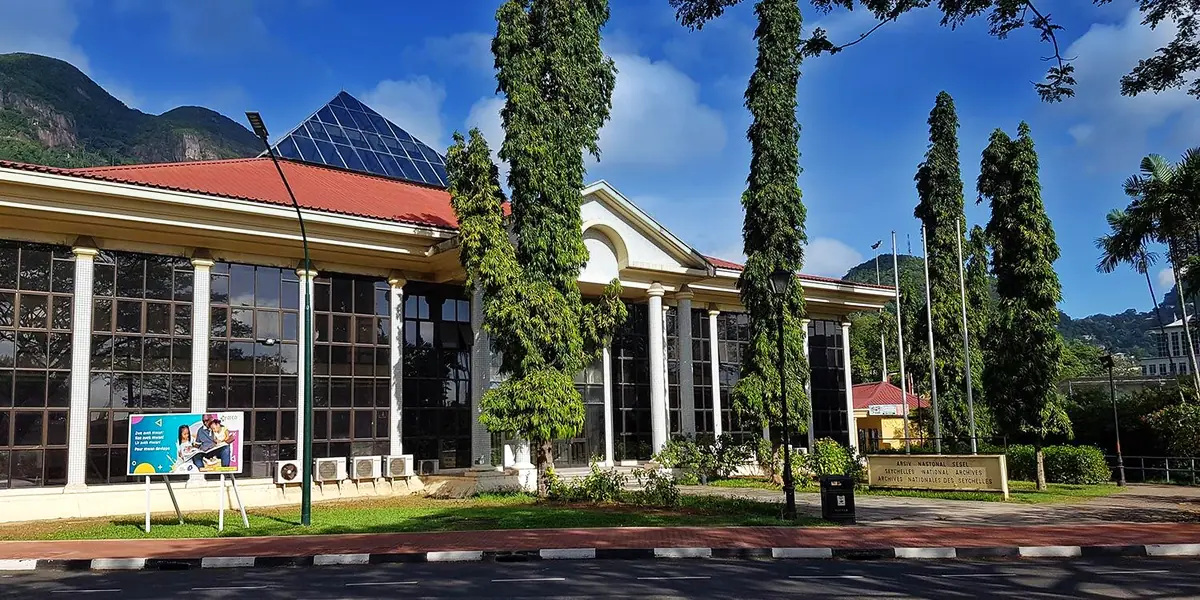
The cemetery combines well with other places in Victoria, such as the National Museum of History, the Sir Selwyn Selwyn-Clarke Market, the Hindu Temple Arul Mihu Navasakthi Vinayagar or the Victoria Clocktower. If you are interested in the early days of the colony, the National Archives offer further traces.